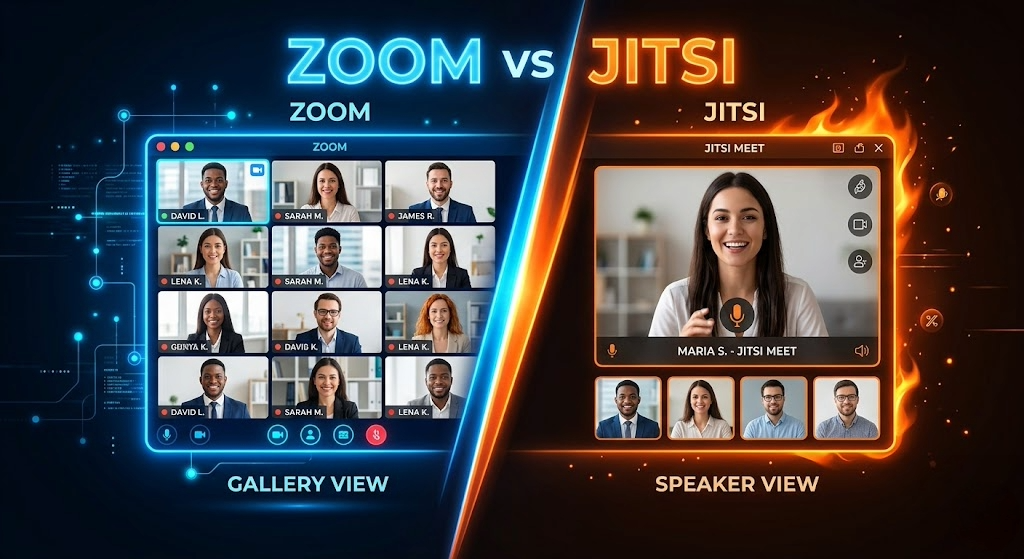
Zoom se convirtió en el verbo de la pandemia. Antes de 2020, la videoconferencia era una herramienta más del kit empresarial, usada por algunos y evitada por otros. Después de 2020, decir zoom era decir reunión remota con la misma naturalidad que decir google es decir búsqueda en internet. Esa posición de mercado tiene un coste que la mayoría de usuarios no calcula hasta que necesitan negociar con el proveedor o hasta que leen los términos de servicio con más cuidado del habitual: dependencia total de una infraestructura privada americana, precio por usuario que escala con el equipo sin que el valor recibido escale de la misma forma, y una historia de privacidad que incluye al menos un escándalo mayor de cifrado falso y el enrutamiento de llamadas europeas a través de servidores chinos.
Jitsi Meet, el proyecto de videoconferencia de código abierto que hoy mantiene 8x8, llevaba años siendo percibido como la alternativa funcional pero incómoda para quien no quería pagar a Zoom. En 2026, esa percepción ya no refleja la realidad del producto. La brecha de funcionalidades se ha cerrado en la mayoría de casos de uso empresarial habitual, y las ventajas de soberanía digital que Jitsi ofrece, especialmente en su modalidad autohospedada, se han vuelto más relevantes a medida que las regulaciones europeas de datos se aplican con mayor rigor y los debates sobre jurisdicción americana de los datos corporativos se han vuelto más concretos y menos teóricos.
El ascenso de Zoom y las grietas que la pandemia tapó
Zoom fue fundada en 2011 por Eric Yuan, exvicepresidente de ingeniería en Cisco WebEx. Yuan se frustró con la complejidad y la falta de fiabilidad de WebEx y decidió construir una alternativa desde cero, con estabilidad de conexión en condiciones de ancho de banda variable como prioridad técnica absoluta. El resultado fue un producto que funcionaba mejor que WebEx y Skype en lo que más importa en una videollamada: que la imagen no se pixele y el audio no se corte en el momento crucial. Ese diferencial técnico, combinado con un modelo freemium generoso, lo llevó a dominar el mercado corporativo antes de la pandemia y a convertirse en infraestructura crítica de la sociedad en 2020 de una forma que nadie había anticipado.
El primer escándalo serio llegó ese mismo año, cuando investigadores de seguridad descubrieron que Zoom no implementaba cifrado de extremo a extremo real en sus llamadas, a pesar de afirmarlo explícitamente en su marketing. El cifrado existía entre el cliente y los servidores de Zoom, lo que protege contra terceros externos pero significa que Zoom teóricamente podía acceder al contenido de las llamadas. La empresa implementó E2EE real a finales de 2020, pero con limitaciones importantes: solo funciona en llamadas entre clientes Zoom sin grabación activa y sin participantes conectados por teléfono. Ese mismo año, también se descubrió que algunas llamadas de usuarios europeos estaban siendo enrutadas a través de servidores en China por razones de capacidad, algo que Zoom atribuyó a un error de configuración y que solucionó, pero que dejó una pregunta incómoda sobre el control real de la infraestructura que nadie en el mercado había planteado antes con tanta urgencia.
Nada de esto destruyó a Zoom. La comodidad de la plataforma, su universalidad como estándar de facto y la inercia organizativa de tener ya a todos los usuarios formados en ella hacen que la mayoría de empresas sigan usándola por defecto. Pero sí abrió la puerta a una conversación que era necesaria: si la infraestructura de videollamada es tan crítica para las operaciones de una empresa como lo demostró ser en 2020, ¿debería esa infraestructura depender exclusivamente de una empresa americana sujeta a la Cloud Act, con un historial de problemas de privacidad, y cuyo modelo de negocio requiere que nunca te sea fácil salir?
Jitsi Meet: qué es exactamente y por qué importa
Jitsi es un proyecto de código abierto que comenzó en 2003, pasó por varias manos incluyendo Atlassian, y finalmente llegó a 8x8, empresa americana de comunicaciones en la nube. La versión más conocida y relevante para el propósito de esta comparativa es Jitsi Meet, que puede usarse de dos formas muy distintas: directamente en meet.jit.si, que es la instancia pública mantenida por 8x8 y accesible sin registro a cualquier usuario, o instalada y operada en los propios servidores de una organización, lo que en el ecosistema técnico se llama autohospedaje o self-hosting.
Esta distinción es fundamental para el análisis. Usar la instancia pública de meet.jit.si es cómodo y gratuito, pero los datos de tus llamadas pasan por servidores de 8x8, una empresa americana sujeta a la misma jurisdicción que Zoom. La diferencia con Zoom en ese escenario es menor de lo que parece. La ventaja real de Jitsi emerge cuando una organización instala su propia instancia en un servidor que controla: en ese caso, ningún dato de las llamadas sale de la infraestructura de la organización, no hay tercero con acceso técnico a las conversaciones, no hay Cloud Act aplicable, y el cifrado puede configurarse según las necesidades de seguridad específicas.
El estado actual del producto: honestidad sobre la brecha
En 2021, Jitsi Meet era claramente inferior a Zoom en funcionalidades para uso empresarial cotidiano. El fondo virtual era básico, las salas de espera no tenían opciones avanzadas de configuración, la grabación era complicada de configurar correctamente, y el rendimiento en grupos de más de veinte o treinta personas era irregular con picos de latencia que lo hacían poco adecuado para reuniones importantes. En 2026, la mayor parte de esas diferencias han desaparecido o se han reducido a detalles que la mayoría de usuarios no notan en el uso diario. Jitsi tiene salas de espera configurables, fondos virtuales, compartición de pantalla con audio, grabación tanto local como en la nube cuando se configura con Jibri, salas divididas o breakout rooms, y transcripción con IA disponible como plugin.
Lo que Zoom sigue haciendo mejor que Jitsi en 2026 es la estabilidad de audio y vídeo en grupos muy grandes, por encima de cincuenta participantes, donde la infraestructura de Zoom diseñada para escala masiva sigue siendo superior. El ecosistema de integraciones nativas con plataformas empresariales como Salesforce, HubSpot, Microsoft 365 o Google Workspace es más maduro en Zoom. Y el soporte técnico institucional, con SLAs documentados y responsabilidades contractuales claras, es algo que solo un proveedor comercial puede ofrecer de forma convincente.
El coste comparativo: los números que Zoom no muestra en sus anuncios
Zoom Pro cuesta 13,33 euros por usuario al mes en facturación anual. Zoom Business son 18,33 euros. Para un equipo de 20 personas en el plan Business, eso representa 4.400 euros anuales. Para 50 personas, 11.000 euros. Para 100 personas, 22.000 euros, todos los años, por una herramienta de la que cada año se depende más y de la que cada año cuesta más salir porque el historial acumulado y las integraciones construidas aumentan el coste de cambio. El coste de un servidor dedicado para Jitsi Meet autohospedado en un proveedor cloud europeo como Hetzner u OVH, capaz de dar servicio cómodo a un equipo de hasta veinte personas con llamadas simultáneas de calidad, oscila entre 20 y 50 euros mensuales, incluyendo el servidor y el ancho de banda. Para ese mismo equipo de veinte personas, la diferencia anual entre Zoom Business y Jitsi autohospedado puede ser de 4.000 euros o más.
Jurisdicción y soberanía de datos: el argumento que más importa
Zoom, empresa americana con sede en San Jose, California, está sujeta a la Cloud Act, que permite a las autoridades federales de EE.UU. exigir acceso a datos bajo custodia de empresas estadounidenses, con independencia de dónde estén almacenados esos datos físicamente. Zoom ofrece residencia de datos en la UE y proporciona Cláusulas Contractuales Estándar para clientes europeos, pero la entidad legal que controla la plataforma sigue siendo americana. En 2023, Zoom generó controversia cuando se interpretó que su política de privacidad actualizada podía permitir el uso de datos de reuniones para entrenar modelos de inteligencia artificial, algo que la empresa desmintió y clarificó en una versión revisada de la política, pero que ilustra que los términos de servicio de plataformas americanas son documentos vivos que cambian sin que los usuarios lo noten necesariamente.
Jitsi autohospedado en un servidor de la propia organización o en un servidor europeo bajo control de la organización resuelve todos esos problemas de raíz. No hay términos de servicio de tercero que interpretar. No hay Cloud Act aplicable porque no hay empresa americana en la cadena de datos. No hay política de privacidad que pueda cambiar. Para bufetes de abogados, consultas médicas, periodistas que protegen fuentes, administraciones públicas europeas o cualquier organización que maneje comunicaciones bajo algún tipo de obligación de confidencialidad, esta diferencia es de naturaleza legal, no de preferencia de producto.
La recomendación de Democratic Market
Para equipos pequeños, sin equipo técnico propio, sin comunicaciones sensibles y que necesitan la menor fricción posible para ponerse a trabajar, la instancia pública de Jitsi Meet en meet.jit.si ofrece la mejor relación funcionalidad-coste del mercado de videoconferencia. Es gratuita, no requiere registro, y tiene las funcionalidades suficientes para el 80% de las reuniones cotidianas de un equipo pequeño. No tiene las garantías de soberanía de datos del autohospedaje, pero es una alternativa a Zoom perfectamente válida para ese perfil.
Para equipos con capacidad técnica interna o acceso a soporte externo, para cualquier organización con datos sensibles en sus reuniones, para empresas que quieren controlar su coste de comunicación a medida que crecen, y para cualquier organización que tome en serio la independencia de su infraestructura digital respecto a plataformas americanas, Jitsi autohospedado en servidor europeo es la opción más coherente. Y para grandes organizaciones con eventos de audiencia masiva, integraciones críticas con ecosistemas de software empresarial o necesidad de soporte institucional garantizado por contrato, Zoom sigue siendo la opción más madura. Pero para la mayoría de empresas medianas que no tienen ninguna de esas necesidades específicas, pagar a Zoom es fundamentalmente pagar por comodidad y por la inercia de un estándar de facto. Y los estándares de facto cambian.