Cuando buscas un smartwatch deportivo en 2026, el mercado te ofrece dos nombres por encima de todos los demás: Apple Watch Series 9 y Garmin Epix (2.ª generación). Ambos miden tu frecuencia cardíaca, tu sueño y tus kilómetros con una precisión que hace diez años habría parecido propia de un hospital. Pero hay un dato que ningún catálogo menciona: uno se ensambla en una democracia plena y el otro en un régimen autoritario con una puntuación de 2,12 sobre 10 en el índice de democracia más citado del mundo.
El Índice de Democracia EIU como criterio de compra
El Índice de Democracia de la Economist Intelligence Unit (EIU) evalúa 167 países en cinco dimensiones: proceso electoral, funcionamiento del gobierno, participación política, cultura política y libertades civiles. La puntuación va de 0 a 10. Por encima de 8,0 hablamos de democracia plena; entre 6,0 y 8,0, de democracia imperfecta; por debajo de 6,0, de régimen híbrido o autoritario. El umbral de Democratic Market es claro: cualquier componente fabricado en un país con puntuación inferior a 6,0 bloquea el producto en la plataforma, sin excepciones por calidad técnica.
China obtiene 2,12 puntos en el índice EIU 2025, categoría autoritaria. Taiwán obtiene 8,99, democracia plena, en el puesto 10 del ranking mundial. No se trata de preferencias geopolíticas ni de patriotismo de consumo: se trata de condiciones laborales verificables, acceso sindical real, protección de datos y riesgo de vigilancia estatal en la cadena de suministro. Esas condiciones son radicalmente distintas entre uno y otro territorio, y esa diferencia es precisamente lo que Democratic Market intenta hacer visible antes de que el consumidor pague.
Apple Watch Series 9: tecnología de vanguardia con fabricación china
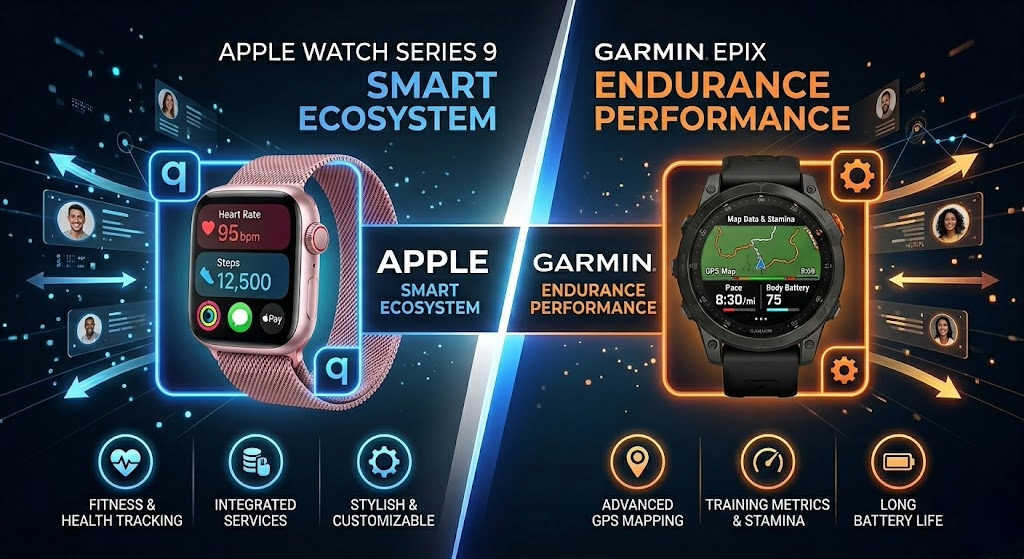
El Apple Watch Series 9 es técnicamente uno de los mejores wearables del mercado. Monta el chip S9 SiP fabricado en un proceso de 4 nanómetros, una pantalla OLED LTPO de 2000 nits visible bajo el sol directo, GPS de doble frecuencia (L1+L5) para trayectorias precisas incluso en cañones urbanos, y sensores de ECG y oximetría de sangre. La batería aguanta aproximadamente 18 horas en uso estándar, o 36 horas en modo ahorro de energía. Su precio parte de 499 euros.
El problema no es el diseño ni el software: es que se ensambla en las plantas de Foxconn y Pegatron en Shenzhen, provincia de Guangdong, China. Apple publica anualmente un informe de responsabilidad del proveedor que incluye auditorías en estas instalaciones. Las propias auditorías detectan —y la empresa lo reconoce— incumplimientos recurrentes en horas extraordinarias, gestión de residuos y acceso de los trabajadores a mecanismos de queja. Apple trabaja en corregirlos, pero el marco legal chino impide la sindicación libre y limita estructuralmente la acción colectiva de los trabajadores.
En materia de privacidad, Apple presenta un perfil más sólido de lo que sugiere el origen de fabricación. Los datos de salud del Apple Watch —ECG, frecuencia cardíaca, ciclo menstrual, historial de sueño— se cifran en el propio dispositivo y en iCloud con cifrado de extremo a extremo. Los servidores europeos de Apple operan desde Irlanda, con una puntuación EIU de 9,19, y los servidores estadounidenses están sujetos a la legislación democrática americana. Tus métricas de salud no viajan a servidores chinos, y eso es un punto a favor que merece ser reconocido sin reservas.
Garmin Epix (2.ª generación): rendimiento de élite con origen democrático
El Garmin Epix de segunda generación es la respuesta de la empresa americana a quienes exigen tanto pantalla AMOLED como batería de larga duración. La pantalla de 47 mm con cristal de zafiro ofrece 1000 nits de brillo y una legibilidad excelente incluso en exteriores. La batería aguanta 16 días en modo smartwatch y 42 horas en uso continuo de GPS, frente a las 18 horas del Apple Watch. El sistema multiGNSS recibe señales GPS, GLONASS, GALILEO y BeiDou de forma simultánea. Su precio parte de 749 euros.
Garmin fabrica sus dispositivos en Taiwán —EIU 8,99— y en sus instalaciones de Oregón, Estados Unidos —EIU 7,85. Ambos territorios cuentan con legislación laboral que garantiza sindicación libre, negociación colectiva y protección frente al despido arbitrario. Garmin Connect, la plataforma de datos de la empresa, almacena la información de los usuarios en servidores ubicados en Estados Unidos y Europa, bajo el marco del RGPD para los usuarios europeos. La empresa no vende datos de salud a terceros y permite exportar o eliminar toda la información desde la propia aplicación.
La suite de análisis de Garmin incluye funciones como Training Readiness, que combina carga de entrenamiento, calidad del sueño y niveles de estrés para recomendar si conviene entrenar fuerte o recuperar, y Body Battery, un indicador de energía disponible basado en la variabilidad de la frecuencia cardíaca. Estas herramientas no tienen equivalente directo en watchOS, y explican por qué el Epix es la elección de referencia entre triatletas, ultracorredores y ciclistas de competición en toda Europa.
Comparativa técnica lado a lado
En pantalla, el AMOLED de 47 mm con cristal de zafiro de Garmin compite en calidad con el OLED LTPO de 45 mm de Apple, con ventaja de Garmin en resistencia y legibilidad bajo sol directo. En batería, la diferencia es enorme: 16 días en modo smartwatch frente a 18 horas, una ventaja decisiva para cualquier actividad deportiva de varios días. En GPS, ambos ofrecen precisión de nivel profesional, aunque el sistema multiGNSS de Garmin añade GALILEO y BeiDou a la combinación GPS y GLONASS de Apple.
En sensores de salud, Apple añade ECG y temperatura de muñeca, mientras que Garmin suma oxímetro de pulso, variabilidad de frecuencia cardíaca y estimación de VO2max, con ventaja para Garmin en métricas deportivas avanzadas. En ecosistema, el Apple Watch exige un iPhone para funcionar plenamente, mientras que el Garmin Epix es compatible tanto con iOS como con Android, una ventaja relevante de flexibilidad. En precio, Apple resulta más accesible desde 499 euros frente a los 749 euros del Garmin Epix.
Privacidad y datos: quién ve tus métricas de salud
Los datos que genera un smartwatch están entre los más sensibles que existen: ritmo cardíaco en reposo, patrones de sueño, variabilidad de frecuencia cardíaca, historial de actividad física, ciclos menstruales e incluso lecturas de ECG. En manos equivocadas, este perfil puede usarse para inferir condiciones de salud que afectan a seguros, empleo o acceso al crédito. El origen jurisdiccional del fabricante importa porque determina bajo qué marco legal operan sus servidores y qué protección real tienen tus datos frente a un requerimiento estatal.
Apple ofrece garantías sólidas en privacidad: el procesamiento en el propio dispositivo y el cifrado de extremo a extremo en iCloud son políticas reales, no marketing. El riesgo con el Apple Watch no está en el software sino en la cadena de fabricación: los trabajadores que ensamblan el dispositivo en China no tienen los mismos derechos que los trabajadores en Taiwán u Oregón, y la empresa que fabrica sus componentes opera bajo un régimen que puede exigir acceso a datos corporativos sin orden judicial democrática. Eso no significa que tu Apple Watch envíe datos a Pekín, pero sí que la estructura sistémica es más opaca de lo deseable.
Legislación europea 2026 aplicable a wearables
El Reglamento europeo de Ciberresiliencia (Cyber Resilience Act), en fase de aplicación progresiva durante 2026, exige a los fabricantes de dispositivos conectados —incluidos los smartwatches— cumplir requisitos mínimos de seguridad por diseño y notificar vulnerabilidades explotadas activamente en un plazo de 24 horas. Esta normativa se aplica por igual a Apple y a Garmin en tanto que ambos venden en el mercado europeo, pero no regula el país de fabricación del hardware, únicamente el software y la gestión de vulnerabilidades.
El RGPD sigue siendo el marco de referencia para los datos de salud generados por estos dispositivos, y ambas empresas almacenan la información de usuarios europeos en servidores dentro de la Unión Europea. La diferencia relevante no está, por tanto, en la normativa de datos aplicable —que es la misma para ambos fabricantes— sino en la cadena de fabricación física del hardware, que el RGPD no regula y que solo un criterio adicional, como el que aplica Democratic Market, puede hacer visible al consumidor.
Cómo evalúa Democratic Market esta categoría
Democratic Market clasifica los wearables según dos ejes: el país donde se ensambla el producto final y el país donde se almacenan los datos que genera. Un producto necesita superar el umbral de 6,0 puntos EIU en el primer eje para poder listarse, independientemente de dónde procesa sus datos. Es un criterio deliberadamente estricto: un smartwatch con excelente política de privacidad pero fabricado en un país por debajo del umbral no se considera verificado, porque las condiciones laborales de fabricación son, en sí mismas, un criterio democrático independiente de la protección de datos.
Por ese motivo, el Apple Watch Series 9 no supera el filtro de cadena de suministro de Democratic Market, a pesar de sus sólidas políticas de privacidad en el tratamiento de datos. El Garmin Epix (2.ª generación), en cambio, sí figura entre los productos verificados de la plataforma, al cumplir ambos criterios: fabricación en democracias plenas y almacenamiento de datos bajo marcos legales democráticos verificables.
Otras alternativas democráticas: Polar, Suunto y Coros
Garmin no es la única marca de wearables deportivos con fabricación en democracias plenas. Polar, empresa finlandesa fundada en 1977 y pionera del pulsómetro deportivo, fabrica sus dispositivos combinando plantas en Finlandia —EIU 9,30— y subcontratistas en el sudeste asiático auditados bajo estándares europeos. Suunto, también finlandesa, mantiene un perfil similar y se ha especializado en relojes de montaña y buceo con una comunidad de usuarios muy fiel en el norte de Europa. Ninguna de las dos iguala el catálogo de funciones de Garmin, pero ambas ofrecen una alternativa europea dentro del mismo umbral democrático.
Coros, marca más joven fundada en 2014 y con sede formal en California —EIU 7,85—, ha ganado popularidad entre corredores de ultradistancia gracias a una autonomía de batería que en algunos modelos supera incluso a la del Garmin Epix, con hasta 30 días en modo smartwatch. Su fabricación, sin embargo, se realiza mayoritariamente en instalaciones subcontratadas en Asia, y Democratic Market recomienda verificar caso por caso la ubicación exacta de la planta de ensamblaje antes de asumir que la sede corporativa refleja el origen real del hardware.
Preguntas frecuentes sobre smartwatches y democracia
¿El Apple Watch es inseguro para mis datos de salud? No en el sentido de que un tercero no autorizado pueda acceder fácilmente a ellos: el cifrado de extremo a extremo de Apple es robusto y verificado por auditores independientes. La preocupación democrática de este artículo se centra en las condiciones laborales de fabricación en China, no en la seguridad del software una vez el dispositivo está en manos del usuario. ¿Puedo comprar un Apple Watch fabricado fuera de China? No: toda la producción de la serie Watch, sin excepción, se concentra en plantas de Foxconn y Pegatron en Shenzhen, por lo que ninguna variante actual del catálogo Apple supera el filtro de origen de Democratic Market.
Guía práctica de compra
Si tu prioridad es el criterio democrático sin concesiones, la elección es clara: Garmin Epix (2.ª generación). Si tu prioridad es la integración total con el ecosistema Apple —iPhone, AirPods, Mac— y el Apple Watch cubre bien tus necesidades diarias, ten en cuenta que estás asumiendo conscientemente una cadena de fabricación con una puntuación EIU de apenas 2,12, aunque con garantías de privacidad de datos relativamente sólidas una vez el dispositivo está en tu poder.
Para el deportista que necesita autonomía de varios días, compatibilidad multiplataforma y métricas avanzadas de recuperación, el Garmin Epix ofrece ventajas técnicas reales más allá del criterio democrático, lo que refuerza la recomendación desde una perspectiva puramente funcional. Para el usuario casual que prioriza el precio de entrada y la integración con su teléfono, la decisión es más difícil, y Democratic Market recomienda al menos conocer el dato antes de decidir.
Conclusión y recomendación final
Si el criterio democrático es tu prioridad, la respuesta es inequívoca: Garmin Epix (2.ª generación). Se fabrica íntegramente en democracias plenas, sus datos están bajo el RGPD europeo y sus funciones deportivas son superiores para cualquier uso más allá del smartwatch cotidiano. El precio más elevado es la diferencia real, no una penalización ética. Si estás dentro del ecosistema Apple y el Apple Watch te cubre bien, no es una elección irresponsable, pero sí es una elección con una cadena de suministro que cualquier consumidor informado debería conocer antes de pagar.
Democratic Market lista el Garmin Epix (2.ª generación) entre sus productos verificados. El Apple Watch Series 9 no supera el filtro de cadena de suministro por su fabricación en China, con una puntuación EIU de 2,12. Esto no es una valoración de la calidad del producto —que es excelente— sino la consecuencia directa del criterio que define esta plataforma: ningún componente fabricado por debajo de 6,0 puntos EIU puede aparecer como verificado, con independencia de cuán buena sea su política de privacidad una vez el dato ya ha salido de la fábrica.