The global textile sector moves $2.5 trillion per year and employs more than 300 million people, most of them in countries with EIU scores below 6.0. The fashion industry is, along with electronics, the one that presents the greatest challenges for democratic origin verification. But there are exceptions. Fjällräven's Kanken backpack is one of them — and the reason is not only where it is made, but how long it lasts.
The fashion problem: opacity as a business model
In 2024, Fashion Revolution audited the world's 250 largest fashion brands. Only 26% published the list of their first-tier suppliers — that is, the factories where the clothes are sewn. The percentage publishing data on second-tier suppliers — spinners, tanneries and raw material manufacturers — fell to 7%. In terms of traceability, 93% of the industry is a black box.
The reasons are multiple: protection of trade secrets, complexity of supply chains involving thousands of suppliers, and — importantly — an economic model based on speed and volume that penalises transparency. Zara launches more than 20,000 new references per year. H&M manufactured 3 billion garments in 2023. At that scale, knowing exactly who made what and where is, deliberately, secondary.
Bangladesh (EIU 5.74) and Vietnam (EIU 2.82): fashion's global workshops
60% of global clothing is manufactured in five countries: China (EIU 1.94), Bangladesh (EIU 5.74), Vietnam (EIU 2.82), India (EIU 7.18) and Indonesia (EIU 6.53). Of the five, only India and Indonesia exceed Democratic Market's threshold. China, Bangladesh and Vietnam — which account for the majority of volume — are authoritarian regimes or countries with serious deficits in civil liberties and labour rights.
The collapse of Rana Plaza in Bangladesh in 2013 — which killed 1,134 textile workers — brutally demonstrated the true cost of fast, opaque fashion. Ten years on, conditions in Bangladeshi factories have improved in some structural safety indicators, but wages remain well below subsistence level and the right to strike is formally legal but in practice suppressed.
Fjällräven: a Swedish company with a visible supply chain
Fjällräven is a Swedish company founded in 1960 (Sweden, EIU 9.39 — full democracy). It publishes annually its complete list of first and second-tier suppliers, including the factory name, country, number of workers and the results of the most recent social audits. In 2025, Fjällräven's sustainability report listed 87 direct suppliers, 94% of which had been audited by an independent firm within the previous two years.
This does not mean its entire chain is flawless. The bulk of Kanken backpack assembly takes place in Vietnam and Bangladesh — neither exceeding the 6.0 threshold. What sets Fjällräven apart from the industry standard is not that its factories are perfect: it is that it makes them visible, auditable and subject to documented continuous improvement.
G-1000 fabric: recycled polypropylene of European origin
The G-1000 fabric that gives the Kanken Classic its rigidity and resistance is a Fjällräven proprietary blend: 65% recycled polyester and 35% cotton. The polyester comes from recycled PET bottles, primarily from western Europe. G-1000 fabric production takes place at bluesign-certified facilities in Germany (EIU 8.98) and the Netherlands (EIU 9.00) — both full democracies.
The bluesign certification guarantees that the dyeing and treatment of the fabric meets the most demanding standards in terms of water use, energy and chemicals. Democratic Market verified Fjällräven's bluesign certification against the organisation's public database.
The 20-year rule: why durability is a democratic criterion
The original Kanken Classic has been in production since 1978. The first units are still in use nearly 50 years later. Fjällräven offers a lifetime repair service — the company repairs, replaces zippers and reweaves worn straps. If the backpack cannot be repaired, they take it back for recycling.
This matters for Democratic Market's analysis for a direct mathematical reason: the democratic impact of a supply chain is amortised over the product's lifetime. A backpack that lasts 20 years has twenty times lower impact per year of use than an equivalent that lasts one year. Even if the point of manufacture is the same, the annualised democratic cost is radically different.
Five questions for evaluating any fashion brand
- →Does the brand publish the list of its assembly factories with name, country and number of workers? If not, the supply chain is opaque by default.
- →Are there independent, recent social audits of those factories, with public access to the results (not just a summary)? Internal audits or those without public access are not comparable.
- →Does the main fabric or material have a verifiable geographical origin and a recognised process certification (bluesign, GOTS, OEKO-TEX, FSC for forest materials)?
- →Is the product designed to be repaired, not replaced? Are spare parts available for at least 5 years after purchase?
- →Does the average EIU score of the countries where the main components are manufactured exceed 6.0? If a brand does not publish this information, Democratic Market cannot verify it and cannot list it.
The Kanken's score on Democratic Market
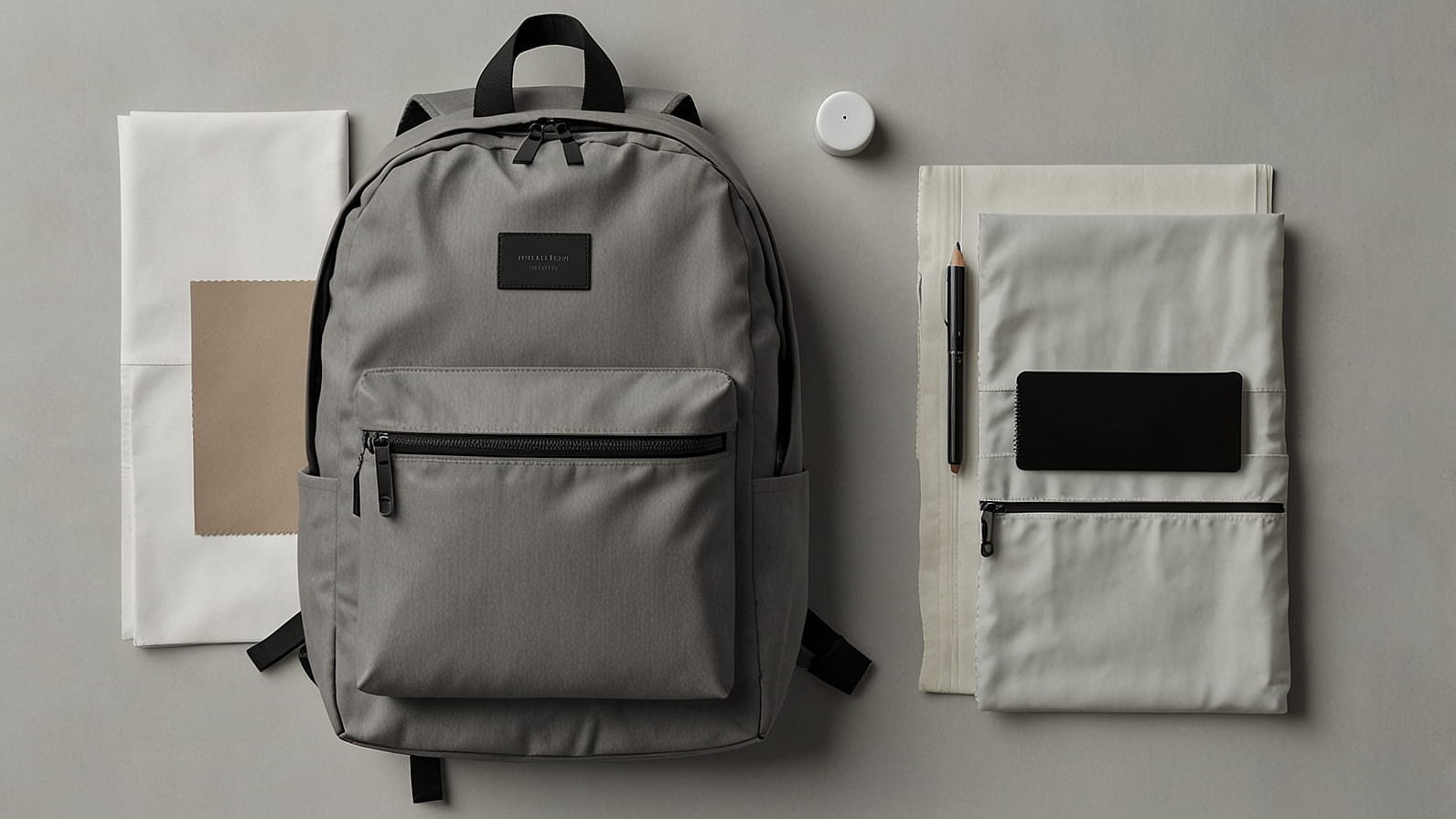
The Fjällräven Kanken Classic available in Democratic Market's catalogue has a composite score of 7.2 — flawed democracy. The G-1000 fabric (Germany, Netherlands) and the brand's origin (Sweden) raise the average, but assembly in Vietnam pulls it down. It is a product that passes the 6.0 threshold thanks to the combination of transparency, verifiable materials and exceptional durability. It is not a perfect score — but it is the highest available today in a general-purpose backpack.
The Fjällräven Kanken Classic is available in the Democratic Market catalogue with its full Transparency Shield: G-1000 fabric of European origin certified by bluesign, social audits of assembly factories, and a lifetime repair policy. It is the only backpack on the market with that level of public traceability.