When a cream carries the label 'natural', 'organic' or 'sustainable', consumers assume it is also ethical in terms of origin. But the most coveted ingredients in natural cosmetics have extraordinarily opaque supply chains, with origins in countries that are rarely discussed when buying a jar of moisturiser.
Mica: the mineral that gives your make-up its shimmer (India, EIU 7.18)
Mica is the mineral that gives eyeshadows, highlighters and foundations their luminous effect. Approximately 60% of the world's mica is extracted in the Indian state of Jharkhand — one of the country's poorest states, with high rates of documented child labour in artisanal mines. India scores 7.18 on the EIU index, classifying it as a flawed democracy. The score does not capture the specific situation in Jharkhand, where labour rights are formally legal but effective enforcement is limited.
Since 2018, a consortium of cosmetics brands (Responsible Mica Initiative) has worked to trace and improve the mica supply chain in India. By 2025, more than 100 companies are members. However, fewer than 15% of global mica has verified traceability to the mine. Most cosmetic products containing mica, including luxury brands, cannot confirm the exact origin of this ingredient.
Argan oil: Morocco (EIU 4.68) — below the threshold
Argan oil, extracted from the fruit of Argania spinosa in south-west Morocco, is a premium ingredient in high-end cosmetics. Morocco scores 4.68 on the EIU index — hybrid regime, below Democratic Market's 6.0 threshold. The country has a formally elected parliament, but real power is concentrated in the monarchy and opposition parties operate under documented restrictions.
This does not mean argan oil is intrinsically problematic: the Berber women's cooperatives that manage much of the production in the Souss-Massa region have a model internationally recognised for its positive socioeconomic impact. But the political framework of the country of origin makes it incompatible with Democratic Market's standard. A product containing argan oil as a primary ingredient cannot be listed on our platform.
Shea butter: Burkina Faso (EIU 1.72) — authoritarian regime
Shea butter is a ubiquitous ingredient in body creams, lip balms and hair products. Burkina Faso accounts for a significant share of global production. The country scored 1.72 on the EIU Democracy Index 2025 — authoritarian regime — following the 2022 coup that overthrew the elected government. The military junta currently governing the country has suspended the constitution, dissolved parliament and expelled several international media organisations.
Many 'natural' and 'fair trade' cosmetics brands using shea butter from Burkina Faso have fair-price agreements with local cooperatives — a real step forward in terms of economic conditions for producers. But paying fair prices to workers in a country governed by a military junta does not make the origin democratic. These are two distinct dimensions that are frequently conflated in sustainable cosmetics marketing.
Ingredients with the best democratic origin
Not all natural cosmetics ingredients have problematic origins. There are alternatives with very solid EIU scores:
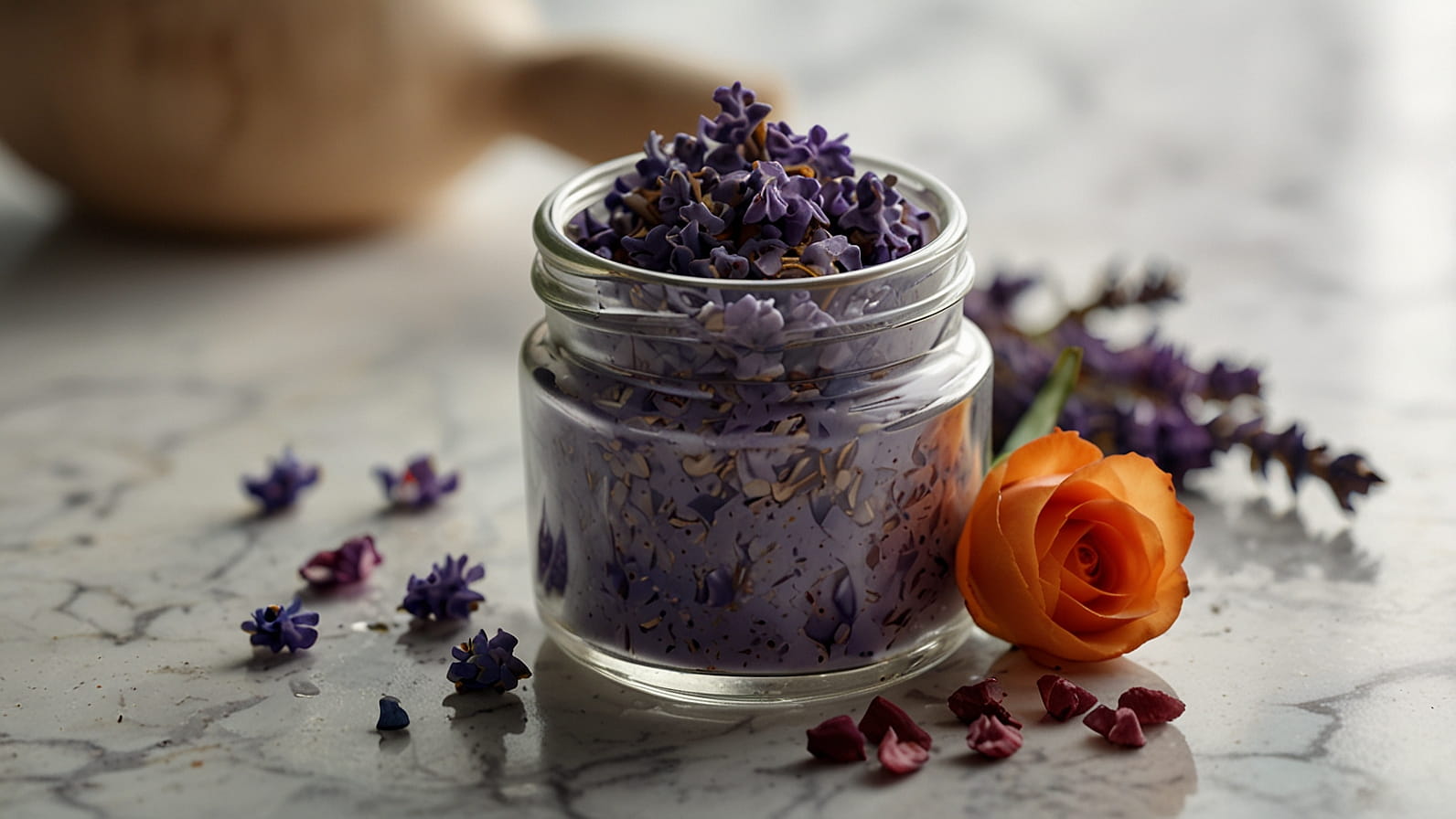
- →Lavender oil from Provence, France (EIU 7.99 — flawed democracy): essential oil from south-east France has a fully traceable supply chain, with Haute-Provence designation of origin and audited farmers' cooperatives.
- →Beeswax from Germany and Austria (EIU 8.98 and 8.60): European beekeeping standards are the world's strictest. Certified organic beeswax of German or Austrian origin has traceability to the hive.
- →Rosehip oil from Chile (EIU 7.64) and Argentina (EIU 7.28): both countries exceed the 6.0 threshold. Patagonian rosehip oil has well-established organic certification standards.
- →Olive oil from Spain, Italy and Greece (EIU 7.94, 7.72 and 7.35): hydrating and antioxidant ingredient with protected designations of origin. Supply chain entirely within the EU.
- →Aloe vera from the Canary Islands, Spain (EIU 7.94): Canarian-grown aloe vera carries European organic certifications and a short, traceable supply chain.
How Democratic Market reads a cosmetics INCI list
When a cosmetics seller submits their application to Democratic Market, the verification process identifies each active ingredient with significant weight in the formulation (typically >1% of the total) and traces its geographical origin. Trace ingredients (<0.5%) from countries below 6.0 are evaluated case by case depending on whether functionally equivalent alternatives of democratic origin are available on the market.
The result is that cosmetics is one of the categories where the most applications require partial reformulation before approval — not because brands are negligent, but because the most effective and best-documented ingredients (argan, shea, mica) have precisely the most geographically complex democratic origins.
L'Occitane en Provence, available in the Democratic Market catalogue, uses predominantly European-origin ingredients — lavender, olive oil, Provençal verbena — with documented traceability to the farms of origin in southern France. Its composite EIU score is 7.9.