
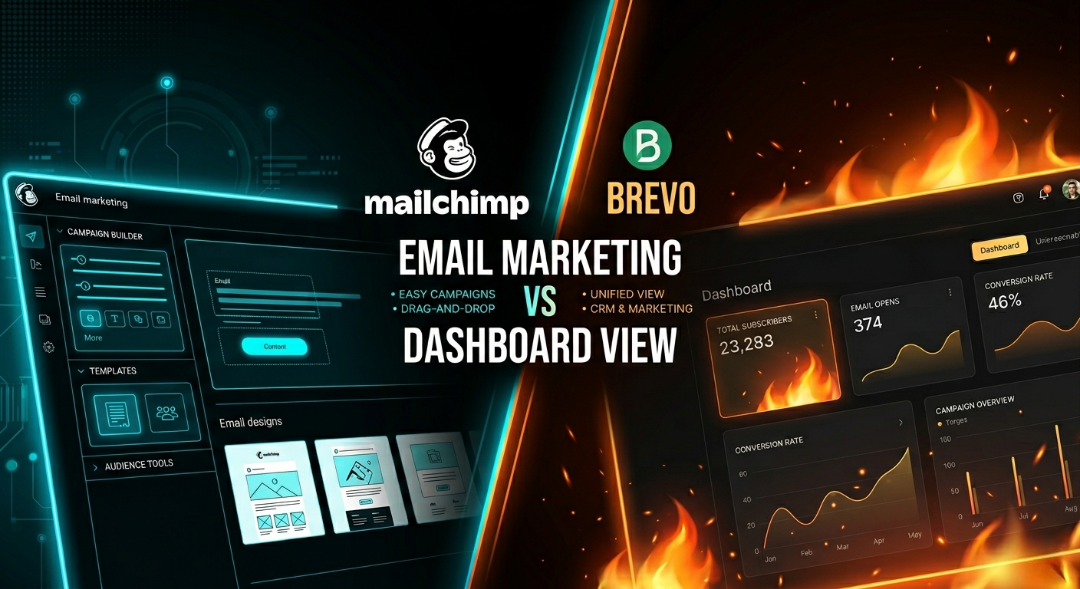
Hay una pregunta que cualquier empresa, autónomo o proyecto editorial acaba haciéndose tarde o temprano: ¿Mailchimp o Brevo? Durante años, Mailchimp fue la respuesta por defecto. Era la herramienta con la que todo el mundo aprendía email marketing, la que aparecía en todos los tutoriales, la que integraba con todo. Luego llegó Brevo, antes conocida como Sendinblue, y algo cambió. No porque Brevo sea radicalmente superior en todas las dimensiones, sino porque el mercado empezó a hacerse preguntas incómodas sobre Mailchimp: ¿por qué sube de precio tan rápido cuando crece la lista? ¿Por qué las plantillas parecen las mismas de hace diez años? ¿Y dónde están, exactamente, los datos de mis suscriptores?
En Democratic Market, esa última pregunta no es retórica. Forma parte del análisis. Cuando evaluamos herramientas de negocio, el origen democrático de la empresa que las fabrica importa tanto como la usabilidad o el precio. Y en esta comparativa, la dimensión geopolítica que casi ninguna guía menciona resulta ser uno de los factores más relevantes para una empresa europea.
El modelo de negocio que define todo lo demás
Para entender por qué Mailchimp y Brevo han tomado caminos tan distintos, hay que entender quiénes son y cómo llegaron hasta aquí. Mailchimp fue fundada en Atlanta en 2001 por Ben Chestnut y Dan Kurzius como herramienta secundaria dentro de una agencia web. Creció orgánicamente durante casi dos décadas sin capital riesgo, lo que la convirtió en un caso de libro sobre cómo construir un negocio de software rentable sin financiación externa. En 2021, Intuit la adquirió por 12.000 millones de dólares. Esa adquisición cambió el producto de maneras que muchos usuarios veteranos describen como un deterioro progresivo: precios más altos, funciones trasladadas de planes gratuitos a planes de pago, integración forzada con el ecosistema Intuit que no todos los usuarios necesitan. Hoy, Mailchimp es fundamentalmente una herramienta americana, propiedad de una corporación americana que factura más de 14.000 millones de dólares anuales, con datos procesados bajo jurisdicción americana.
Brevo tiene una historia diferente y, para los propósitos de esta comparativa, más relevante para el mercado europeo. Fue fundada en París en 2012 por Armand Thiberge y Kapil Sharma. Aunque tuvo rondas de inversión significativas, mantuvo su sede y su infraestructura de datos fundamentalmente dentro de la Unión Europea. El cambio de nombre de Sendinblue a Brevo en 2023 fue parte de una estrategia de posicionamiento más global, pero la entidad legal que controla el servicio y los datos de sus clientes europeos sigue siendo francesa y sigue operando bajo el paraguas del RGPD de forma nativa. Para una empresa española o alemana que envía emails a clientes europeos, esa diferencia no es un detalle técnico secundario: es la diferencia entre procesar datos de tus suscriptores bajo el Reglamento General de Protección de Datos de forma directa, o hacerlo a través de un acuerdo de transferencia internacional con todas las incertidumbres jurídicas que arrastra desde la sentencia Schrems II del Tribunal de Justicia de la UE.
Precios: la trampa del crecimiento en Mailchimp
Si tienes menos de mil suscriptores y envías pocos emails, Mailchimp puede parecer gratuito y perfectamente funcional. El problema llega cuando creces, y llega de forma no lineal. El modelo de precios de Mailchimp cobra por contactos almacenados en la base de datos, no por emails enviados, y la tarifa escala de forma agresiva a medida que aumenta el número de suscriptores. Pasar de 5.000 a 10.000 contactos puede suponer más que doblar la factura mensual. Lo que a muchos usuarios les sorprende es que los contactos que han cancelado la suscripción pero no han sido eliminados manualmente siguen contando para el plan. Es decir, estás pagando por personas que no están recibiendo ninguno de tus emails, lo que obliga a una gestión activa y constante de la lista o a aceptar que parte de tu presupuesto mensual se va en contactos inactivos.
Brevo adoptó un modelo diferente desde el principio y lo ha mantenido como ventaja competitiva: cobra por emails enviados al mes, no por contactos almacenados. Puedes tener 100.000 contactos en la base de datos y pagar únicamente por los emails que realmente envíes cada mes. Para empresas con listas grandes pero comunicación poco frecuente, o con segmentos de contactos en reposo que quieren mantener para campañas puntuales de reactivación, esto representa una ventaja económica muy significativa. El plan gratuito de Brevo permite hasta 300 emails diarios sin límite de contactos, una oferta que Mailchimp simplemente no puede igualar en términos de flexibilidad práctica para quien empieza o tiene listas mixtas.
Funcionalidades: más parejo de lo que la reputación sugiere
En funcionalidades de email marketing puro, las dos plataformas están mucho más equilibradas de lo que sus diferencias de precio y reputación sugieren. Ambas ofrecen automatizaciones basadas en comportamiento del suscriptor, segmentación avanzada, tests A/B, editores de arrastrar y soltar, analítica detallada de aperturas y clics, gestión automática de rebotes y cancelaciones, y personalización de contenido mediante etiquetas. Mailchimp tiene una ventaja histórica en la calidad y variedad de sus plantillas prediseñadas y en la profundidad de sus integraciones nativas con plataformas de ecommerce como Shopify, WooCommerce o Magento. Si tu negocio depende de conectar el comportamiento de compra de tus clientes con tus campañas de email de forma muy granular, Mailchimp tiene más años de desarrollo y más documentación en esa área específica.
Brevo ha cerrado mucho esa brecha en los últimos dos años, pero el editor visual sigue siendo algo más limitado y el ecosistema de integraciones nativas es menos amplio que el de Mailchimp. Donde Brevo sí supera claramente a Mailchimp es en la inclusión de canales adicionales dentro de los planes base. Brevo incluye SMS marketing, chat en tiempo real para la web, y funcionalidades básicas de CRM y llamadas dentro de sus planes sin coste adicional relevante. Mailchimp ha añadido SMS en algunos mercados pero como producto separado con un coste que se acumula sobre la suscripción principal. Para negocios que quieren centralizar múltiples canales de comunicación con sus clientes en una sola plataforma sin multiplicar las facturas, Brevo ofrece una propuesta mucho más coherente desde el punto de vista de los costes totales.
Entregabilidad: el criterio que más importa y menos se menciona
Todo lo anterior es irrelevante si los emails no llegan a la bandeja de entrada. La entregabilidad, es decir, el porcentaje de emails que efectivamente aterriza en inbox en lugar de carpeta de spam o de promociones, depende de factores técnicos como la reputación del servidor de envío, la correcta configuración de autenticación SPF, DKIM y DMARC, el historial de quejas de spam asociado a la plataforma, y la calidad de las propias listas de cada remitente. Históricamente, Mailchimp tiene una reputación de entregabilidad muy sólida gracias a su volumen masivo de envíos, sus políticas estrictas contra el spam y sus años de relación con los principales proveedores de email. Los estudios independientes más recientes siguen dando a Mailchimp una ligera ventaja en entregabilidad media global, especialmente en Gmail y Outlook.
Brevo ha mejorado sustancialmente su reputación de entregabilidad desde 2020, cuando su modelo de precio bajo atraía a remitentes de menor calidad que dañaban la reputación general de los servidores. Hoy la diferencia existe pero se ha reducido. Y conviene recordar que la entregabilidad en la práctica depende más de la higiene de la propia lista que de la plataforma. Una lista limpia, compuesta por suscriptores que realmente han dado su consentimiento explícito y quieren recibir tus emails, tendrá buena entregabilidad en cualquiera de las dos herramientas. Si tienes una lista antigua con muchos contactos pasivos, comprados o mal adquiridos, ni Mailchimp ni Brevo van a salvarte de la carpeta de spam.
RGPD y soberanía de datos: la dimensión que define la elección en Europa
Este es el punto donde la comparativa tiene consecuencias legales reales para empresas europeas, y donde la diferencia entre ambas plataformas es más estructural que superficial. Mailchimp, como servicio americano propiedad de Intuit, está sujeto a legislación de EE.UU. incluyendo la Cloud Act, que permite a autoridades americanas exigir acceso a datos bajo custodia de empresas estadounidenses aunque estén almacenados en servidores europeos. Mailchimp ofrece a clientes europeos la posibilidad de Cláusulas Contractuales Estándar y procesa datos en centros de datos de la UE, pero la entidad legal que controla y decide sobre esos datos sigue siendo Intuit, una corporación con sede en Mountain View, California, sujeta a la jurisdicción americana.
Brevo, como empresa francesa, opera bajo el marco regulatorio europeo de forma nativa y sin capas adicionales. Los datos de tus suscriptores se almacenan y procesan en la UE por una entidad legal directamente sujeta al RGPD, sin necesidad de acuerdos de transferencia internacional ni de confiar en que las Cláusulas Contractuales Estándar sean suficientes protección jurídica, algo que varios reguladores europeos llevan años cuestionando. Para empresas que manejan datos sensibles de sus suscriptores, que tienen clientes en sectores regulados como sanidad, finanzas o educación, o que simplemente quieren la máxima certeza legal sobre el tratamiento de datos sin pagar a un abogado para interpretar el alcance de la Cloud Act americana, Brevo ofrece una posición más limpia y más sólida desde el punto de vista del cumplimiento normativo.
La recomendación de Democratic Market
Desde el criterio democrático, ambas plataformas pasan el umbral: EE.UU. puntúa 7,85 en el Índice EIU 2024 y Francia 8,07. No hay exclusión posible en ese sentido. La diferencia está en la alineación con los valores de soberanía digital que Democratic Market defiende para empresas europeas. Una plataforma francesa, regulada bajo el RGPD de forma nativa, con datos procesados sin transferencias internacionales y sin la Cloud Act en el horizonte jurídico, es más coherente con el tipo de ecosistema digital que protege al consumidor y a la empresa europea.
La recomendación práctica depende del perfil: si tu negocio es principalmente de ecommerce con integraciones profundas con Shopify o Magento, si haces campañas de automatización muy granulares basadas en comportamiento de compra, y si tu equipo ya conoce Mailchimp y el coste de cambio es alto, Mailchimp sigue siendo la opción más madura en ese nicho específico. Si eres una empresa europea con una lista en crecimiento, que quiere controlar costes a escala, que valora la claridad regulatoria del RGPD sin ambigüedades, y que no depende críticamente de las integraciones de ecommerce de Mailchimp, Brevo es la elección más inteligente a largo plazo. Y si eres un proyecto pequeño o mediano con presupuesto ajustado y lista mixta de canales, el modelo de precios por email enviado de Brevo te da un margen de maniobra económico real que Mailchimp simplemente no ofrece.