Cada vez que subes un documento a Google Drive, una foto a Google Fotos o una hoja de cálculo a Google Sheets, estás tomando una decisión que va mucho más allá de la comodidad o el precio. Estás eligiendo una jurisdicción legal. Estás eligiendo qué gobierno tiene, al menos en teoría, la capacidad de solicitar acceso a esos datos. Estás eligiendo en qué sistema político confías tus archivos más sensibles.
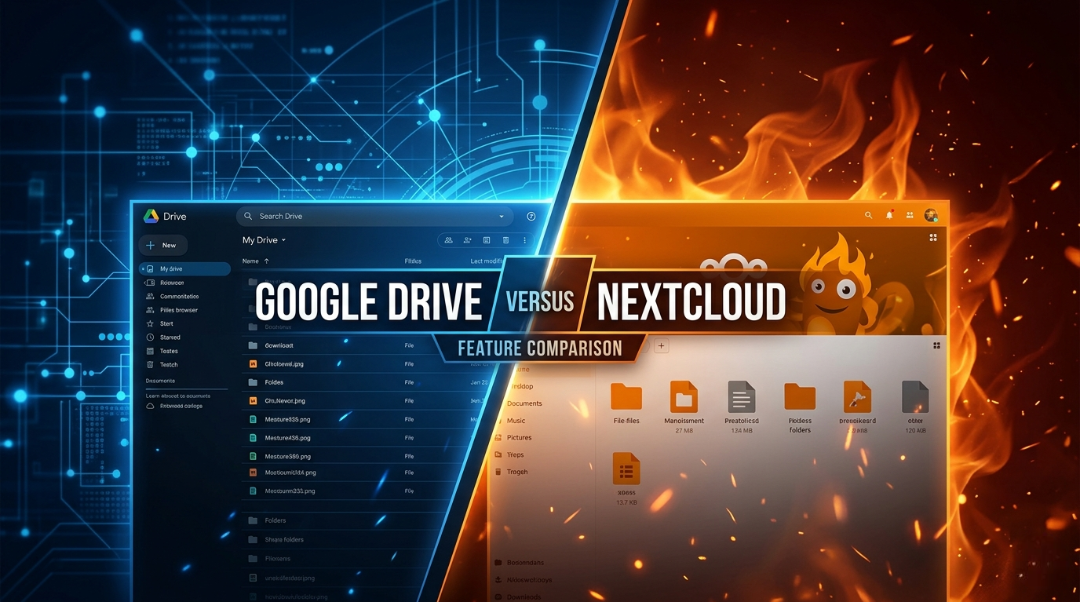
La mayoría de las comparativas entre Google Drive y Nextcloud se centran en espacio de almacenamiento, velocidad de sincronización o integración con otras herramientas. Son comparativas útiles, pero incompletas. Aquí vamos a hacer una diferente: una comparativa desde la perspectiva de la soberanía de datos y el origen democrático de la infraestructura. Porque en 2026, saber dónde están tus datos no es paranoia. Es higiene digital básica.
Google Drive: la infraestructura de un imperio de datos
Google Drive nació en 2012 como la respuesta de Alphabet a Dropbox. Hoy forma parte de Google Workspace, el ecosistema de productividad de la empresa que incluye Gmail, Docs, Sheets, Slides y Meet. Con más de dos mil millones de usuarios activos en todo el mundo, es probablemente el servicio de almacenamiento en nube más usado del planeta.
La infraestructura de Google es colosal. La empresa opera decenas de centros de datos en todo el mundo: en Estados Unidos, Europa, Asia, América Latina y Australia. Sus servidores están en países con perfiles democráticos muy dispares. Los centros de datos europeos de Google se encuentran principalmente en los Países Bajos (8,88 en el Índice de Democracia de la EIU), Bélgica (7,51) y Finlandia (9,20). Hasta aquí, bien. El problema no es la geografía de los servidores: es la jurisdicción legal que los rige.
Google LLC es una empresa estadounidense. Eso significa que, independientemente de dónde estén físicamente sus servidores, está sujeta a la legislación de Estados Unidos. Y la legislación de Estados Unidos incluye la CLOUD Act.
Qué es la CLOUD Act y por qué importa
La Clarifying Lawful Overseas Use of Data Act, más conocida como CLOUD Act, fue aprobada en 2018 por el Congreso de los Estados Unidos. Su nombre suena técnico, pero su implicación es directa: obliga a las empresas tecnológicas estadounidenses a proporcionar datos almacenados en sus servidores cuando el gobierno de EE.UU. lo solicita mediante una orden judicial, incluso si esos datos están físicamente en servidores europeos.
Dicho de otro modo: que tus archivos de Google Drive estén en un servidor holandés no los pone bajo el paraguas del RGPD europeo de forma exclusiva. Google, como empresa americana, puede verse obligada a entregar esos datos a autoridades estadounidenses sin necesidad de pasar por los tribunales europeos. Esto no es una teoría conspirativa: es el texto literal de la ley.
Estados Unidos obtiene una puntuación de 7,85 en el Índice de Democracia de la EIU, lo que lo sitúa en la categoría de democracia imperfecta. Es un país con instituciones sólidas, separación de poderes y libertad de prensa, pero también con un historial documentado de vigilancia masiva —revelado por Edward Snowden en 2013— y un sistema legal que permite solicitudes de datos con escasa transparencia para el usuario afectado. Ningún gobierno de una democracia perfecta lo tiene resuelto del todo. Pero la escala y la legislación específica de EE.UU. lo convierten en un caso singular.
Nextcloud: software libre con vocación europea
Nextcloud no es un servicio de almacenamiento en nube. Es software. Esa distinción es fundamental y define todo lo demás.
Nextcloud GmbH fue fundada en 2016 en Stuttgart, Alemania, por Frank Karlitschek, quien previamente había fundado ownCloud. Alemania obtiene una puntuación de 8,80 en el índice EIU, consolidándose como una democracia plena con instituciones robustas, independencia judicial y un marco legal de protección de datos —el más exigente del mundo antes de que existiera el RGPD— que históricamente ha servido de modelo al resto de Europa.
Pero la particularidad de Nextcloud no es solo su origen alemán. Es que tú —o tu empresa, o tu proveedor de confianza— decides dónde se ejecuta el software. Puedes instalarlo en un servidor en tu propia oficina. Puedes contratarlo con un proveedor europeo certificado. Puedes elegir un centro de datos en Suecia (9,39 en el EIU), en Noruega (9,81) o en cualquier democracia plena que prefieras. La infraestructura está bajo tu control, no bajo el de una corporación cotizada en bolsa con obligaciones legales ante el gobierno estadounidense.
El código de Nextcloud es completamente abierto, auditado por la comunidad y por empresas de seguridad independientes. No hay caja negra. No hay algoritmos propietarios procesando tus documentos en busca de señales para publicidad. Lo que ves es lo que hay.
Análisis democrático: servidores, jurisdicción y acceso gubernamental
Si aplicamos la lógica de Democratic Market a este debate, la pregunta no es solo dónde está el servidor. La pregunta es: ¿bajo qué jurisdicción legal opera ese servidor, y qué democracia —con qué puntuación EIU— controla el acceso a esos datos?
En el caso de Google Drive, la respuesta es compleja y no completamente satisfactoria. Los servidores pueden estar en democracias europeas con puntuaciones altas, pero la empresa matriz opera bajo ley estadounidense, con todas las implicaciones de la CLOUD Act. Existe además el Acuerdo Marco de Privacidad UE-EE.UU. (Data Privacy Framework), aprobado en 2023, que intenta regular estas transferencias. Pero varios juristas europeos cuestionan su solidez, y el historial sugiere que los acuerdos anteriores —Safe Harbor, Privacy Shield— acabaron invalidados por el Tribunal de Justicia de la UE.
En el caso de Nextcloud autohospedado en un proveedor europeo certificado —como Hetzner en Alemania, OVH en Francia o Bahnhof en Suecia— la respuesta es mucho más clara. Los datos están sujetos exclusivamente al RGPD europeo y a la legislación del país donde se ubica el servidor. Ninguna ley americana puede acceder a ellos sin pasar por los tribunales europeos, y los países mencionados tienen puntuaciones EIU que los sitúan en la cima del índice democrático mundial.
Para un periodista que trabaja con fuentes sensibles, para un abogado con expedientes confidenciales, para una ONG que opera en entornos de riesgo o para una empresa con secretos comerciales, esta diferencia no es teórica. Es la diferencia entre una infraestructura que puede estar sujeta a solicitudes gubernamentales opacas y una que no.
Funcionalidades comparadas: donde Google gana en comodidad y Nextcloud en libertad
Sería deshonesto ignorar que Google Drive ofrece una experiencia de usuario extraordinaria. La integración con Docs, Sheets y Slides es fluida. La búsqueda dentro de documentos es casi mágica —Google es, ante todo, una empresa de búsqueda. La colaboración en tiempo real funciona sin fricciones. Y los 15 GB gratuitos de la cuenta básica hacen que sea accesible para cualquier persona con una cuenta de Gmail.
Nextcloud, instalado y configurado correctamente, ofrece prácticamente las mismas funcionalidades. Tiene edición colaborativa de documentos mediante integración con Collabora Online (basado en LibreOffice) o ONLYOFFICE. Tiene calendario, contactos, videollamadas, chat interno y gestión de proyectos. Tiene aplicaciones para Android, iOS, Windows, macOS y Linux. Tiene control de versiones de archivos, papelera de reciclaje, compartición por enlace y gestión granular de permisos.
La diferencia está en la fricción inicial. Configurar Google Drive requiere crear una cuenta de Google. Configurar Nextcloud requiere tener o contratar un servidor, instalar el software —o elegir un proveedor que lo haga— y gestionar actualizaciones. Para un usuario doméstico sin conocimientos técnicos, esa fricción puede ser una barrera real. Para una empresa con un departamento de IT, o para cualquier persona dispuesta a pagar unos pocos euros al mes a un proveedor europeo que ya tiene Nextcloud instalado, la curva de aprendizaje es mucho más suave.
En términos de precio, la comparación también varía según el uso. Google One cobra desde 2,99 euros al mes por 100 GB hasta 9,99 euros por 2 TB. Un servidor privado virtual básico en Hetzner —empresa alemana, EIU 8,80— cuesta alrededor de 4 euros al mes y ofrece espacio ilimitado dentro de la capacidad del disco. Un proveedor de Nextcloud gestionado como Hetzner Storage Share o Nitrokey Cloud cuesta entre 3 y 10 euros al mes dependiendo del almacenamiento. No es más caro. A veces es más barato.
Privacidad y seguridad: más allá del cifrado
Tanto Google Drive como Nextcloud cifran los datos en tránsito y en reposo. En ese sentido, ninguno deja tus archivos expuestos al descubierto. Pero el cifrado por sí solo no responde a la pregunta más importante: ¿quién tiene la clave?
En Google Drive, Google tiene las claves de cifrado. Eso le permite, técnicamente, acceder al contenido de tus archivos. La empresa afirma que sus empleados no leen tus documentos, y hay salvaguardas internas para evitarlo. Pero sus políticas de privacidad sí recogen que puede escanear el contenido de tus archivos para detectar material ilegal, para mejorar sus servicios y para personalizar publicidad en otros productos de Google. No es que Google esté leyendo tu contrato con el cliente de forma activa, pero el modelo de negocio está construido sobre la extracción de valor de los datos.
Nextcloud ofrece cifrado de extremo a extremo en el cliente —opcional pero disponible— que significa que los archivos se cifran en tu dispositivo antes de salir hacia el servidor, y solo tú tienes la clave para descifrarlos. Ni siquiera el administrador del servidor puede acceder al contenido. Esto es especialmente relevante si usas un proveedor externo: pagas por el almacenamiento sin ceder el acceso a tus datos.
Nextcloud también ha recibido auditorías de seguridad independientes de empresas como Cure53, una consultora alemana especializada en ciberseguridad con sede en Berlín. Los resultados son públicos. Google, en cambio, realiza auditorías internas cuyos resultados no son completamente accesibles al público. En seguridad, la transparencia no es un lujo: es un método.
Para quién es cada uno
Google Drive es la opción natural para quienes ya viven dentro del ecosistema Google, para quienes necesitan colaboración sin fricción y para quienes priorizan la comodidad sobre la soberanía de datos. También es una opción razonable para uso personal no sensible: fotos de vacaciones, documentos de trabajo genéricos, listas de la compra compartidas. Si tus archivos no contienen nada que un gobierno extranjero pudiera querer ver, la exposición práctica es baja.
Nextcloud es la opción para organizaciones que manejan datos sensibles: despachos de abogados, clínicas, redacciones periodísticas, ONG en entornos de riesgo, empresas con propiedad intelectual valiosa y ciudadanos que, sencillamente, prefieren que sus archivos no estén sujetos a la jurisdicción de la CLOUD Act. También es la opción natural para cualquier entidad pública europea que quiera coherencia con el RGPD sin depender de infraestructura americana.
Vale la pena mencionar que varios gobiernos europeos ya han tomado posición. El Ministerio de Defensa alemán usa Nextcloud. El gobierno francés ha impulsado Tchap y otras soluciones de software libre para comunicaciones internas. La Comisión Europea ha recomendado públicamente reducir la dependencia de servicios americanos. No son decisiones ideológicas: son decisiones de seguridad operacional.
La soberanía de datos como decisión democrática
Hay una paradoja en el debate sobre almacenamiento en nube que pocas comparativas señalan. Los ciudadanos de democracias europeas con puntuaciones EIU entre 8 y 10 —Alemania, Suecia, Países Bajos, Finlandia— tienden a confiar sus datos a una infraestructura controlada por una empresa sujeta a la legislación de un país con una puntuación de 7,85 y una ley que permite el acceso gubernamental sin consentimiento explícito del usuario. Es una contradicción geopolítica notable.
Nextcloud no es perfecto. Requiere esfuerzo de configuración, requiere confiar en el proveedor que elijas para el alojamiento y requiere mantenimiento. Pero ofrece algo que Google Drive no puede ofrecer por diseño: la posibilidad de que tus datos estén bajo una jurisdicción que tú eliges, en un servidor de un país que puedes evaluar con datos objetivos, gestionado por una empresa cuyo código puedes auditar.
En Democratic Market aplicamos el Índice de Democracia de la EIU para evaluar el origen de los productos que recomendamos. El mismo criterio aplicado al almacenamiento en nube produce una conclusión clara: si puedes elegir dónde viven tus datos, elige democracias plenas. Si puedes auditar el código de la herramienta que los gestiona, mejor. Si puedes prescindir de la jurisdicción de la CLOUD Act, hazlo.
Comprar también es decidir. Y elegir dónde almacenas tus datos también lo es. Cada archivo que subes a un servidor en una democracia plena es, en cierta medida, un voto por el tipo de infraestructura digital que queremos construir en Europa. No es una decisión heroica. Es una decisión disponible para cualquier persona con conexión a internet y diez minutos para configurar una cuenta en un proveedor de Nextcloud europeo.
La nube no es un lugar neutro. Tiene una dirección postal, una jurisdicción legal y una puntuación en el índice EIU. Vale la pena saber cuál es.