DJI controla aproximadamente el 70% del mercado mundial de drones de consumo. Sus productos son técnicamente superiores, accesibles y fáciles de volar. También están en la lista negra del Departamento de Defensa de Estados Unidos, prohibidos para uso en agencias federales americanas, y señalados por investigadores de ciberseguridad de varias universidades europeas por recopilar datos del teléfono del usuario más allá de lo que cualquier drone necesita para volar. Este artículo explica qué significa eso exactamente, con qué base legal ocurre, y por qué el Parrot Anafi 2 existe como alternativa verificable.
Por qué el origen democrático importa en los drones de consumo
Los drones son el caso más extremo de riesgo democrático dentro de la electrónica de consumo por una razón muy concreta: combinan sensores de imagen de alta resolución, GPS de precisión, telemetría continua y conectividad permanente a internet en un dispositivo que vuela literalmente sobre infraestructuras críticas, eventos públicos y domicilios privados. Si esos datos terminan en servidores bajo jurisdicción de un régimen autoritario, el riesgo deja de ser teórico. Es exactamente el argumento que llevó al Congreso de Estados Unidos a incluir disposiciones específicas sobre DJI en la National Defense Authorization Act (NDAA).
En agosto de 2022, el Departamento de Defensa estadounidense incluyó a DJI en su lista de empresas con vínculos verificados con el ejército chino. Esta designación no prohíbe la venta a consumidores privados en Estados Unidos, pero sí impide el uso de productos DJI por agencias federales, fuerzas armadas y contratistas del gobierno. En la Unión Europea, Francia, los Países Bajos y varios países nórdicos han prohibido o restringido severamente el uso de DJI en infraestructuras críticas y operaciones gubernamentales, aplicando un criterio de precaución que Democratic Market comparte plenamente.
DJI Mavic 3: el mejor drone del mercado con el mayor riesgo de datos
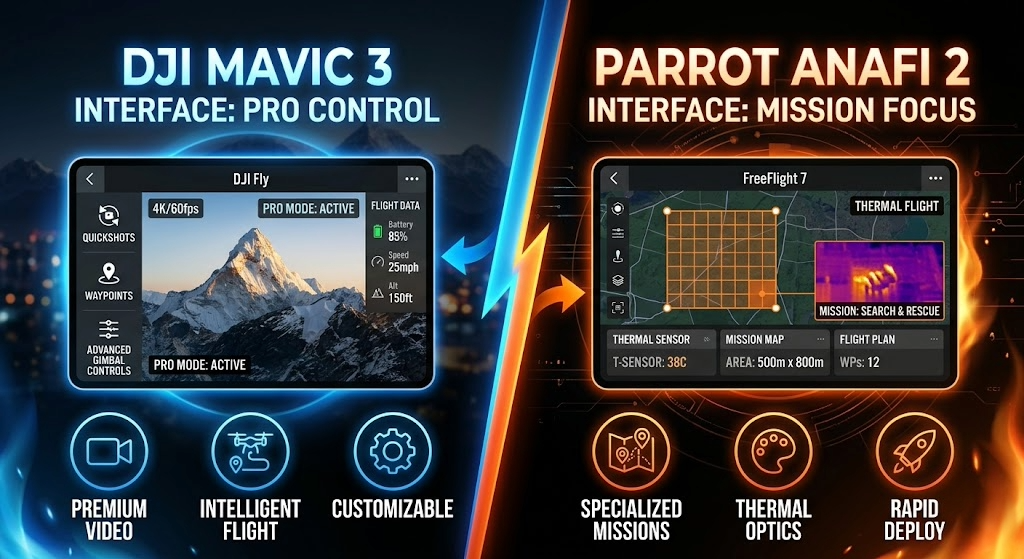
El DJI Mavic 3 es, objetivamente, el drone de consumo más avanzado disponible en 2026. Monta una cámara Hasselblad con sensor CMOS de 4/3 pulgadas capaz de grabar en 5,1K y fotografiar a 20 megapíxeles. El zoom híbrido alcanza 28 aumentos combinando el teleobjetivo de 162 mm con el zoom digital. La autonomía de vuelo llega a 46 minutos por batería, y el sistema de transmisión OcuSync 3.0 mantiene la señal de vídeo en directo hasta 15 kilómetros de distancia con baja latencia. En imagen aérea, ningún competidor en el mismo rango de precio se le acerca.
El problema es que esa excelencia técnica viene envuelta en una cadena de datos que termina en servidores de Tencent Cloud, en China. DJI Technology Co., Ltd. tiene su sede en Shenzhen y opera bajo la legislación china de seguridad nacional, que obliga a las empresas a cooperar con los servicios de inteligencia cuando se les requiere, sin posibilidad legal de negativa ni de notificación pública al afectado. Investigadores de las universidades de Toronto y Bonn han documentado que la aplicación DJI Fly recopila datos del teléfono más allá del drone: historial de aplicaciones instaladas, identificadores del dispositivo y datos de la red Wi-Fi conectada.
DJI ha respondido con un 'Local Data Mode' que desactiva la conexión a servidores externos durante el vuelo, una medida real pero parcial: los propios investigadores señalan que este modo reduce la transmisión en tiempo real pero no elimina la recopilación previa de telemetría del smartphone asociado. China obtiene 2,12 puntos en el índice EIU 2025, la categoría más baja posible dentro del sistema de clasificación de la Economist Intelligence Unit, muy por debajo del umbral de 6,0 que Democratic Market exige a cualquier producto de su catálogo.
Parrot Anafi 2: la alternativa europea con cadena de suministro verificable
Parrot S.A. es una empresa francesa fundada en París en 1994 y cotizada en Euronext desde 2006. Su trayectoria en drones comienza en 2010 con el Parrot AR.Drone, el primer drone de consumo controlado por teléfono móvil del mercado. La línea Anafi, lanzada en 2018, se diseñó desde el principio con un perfil de privacidad diferenciado: datos almacenados en servidores europeos, código de la aplicación auditado por terceros independientes y cumplimiento estricto de la normativa de la Agencia Europea de Seguridad Aérea (EASA).
El Parrot Anafi 2 monta una cámara de 48 megapíxeles con zoom óptico de 32 aumentos y sensor de 1/2 pulgada. La autonomía es de 32 minutos por batería, 14 minutos menos que el Mavic 3, y el rango de transmisión alcanza los 4 kilómetros con la antena estándar. El peso de 299 gramos lo mantiene en la categoría C1 de la normativa EASA europea sin restricciones adicionales de registro. Es NDAA compliant —verificado para uso gubernamental en Estados Unidos— y está homologado para operaciones policiales, defensa civil y cartografía en Francia (EIU 7,99), Alemania (EIU 8,98) y los Países Bajos (EIU 8,88).
Siendo honestos, el Anafi 2 no iguala al Mavic 3 en calidad de imagen ni en autonomía. El sensor es más pequeño, el rango de transmisión es menor y el ecosistema de accesorios es incomparablemente más limitado. Parrot ocupa un nicho profesional y gubernamental donde la soberanía de datos tiene precio: el Anafi 2 cuesta entre 1.500 y 2.500 euros según configuración, frente a los 2.199 euros del Mavic 3 Cine Premium. Para quien vuela sobre instalaciones sensibles, el precio de los datos resulta más alto que el precio del propio drone.
Comparativa técnica lado a lado
En cámara, el Mavic 3 impone su sensor Hasselblad de 4/3 pulgadas y su resolución de 5,1K frente al sensor de 1/2 pulgada y 48 megapíxeles del Anafi 2 —ventaja clara de DJI en calidad de imagen y versatilidad creativa. En autonomía de vuelo, DJI ofrece 46 minutos frente a los 32 del Parrot, una diferencia relevante para sesiones largas de grabación. En alcance de transmisión, DJI llega a 15 kilómetros mediante OcuSync 3.0 frente a los 4 kilómetros del Anafi 2, una ventaja muy significativa para operaciones a distancia.
En precio, el Anafi 2 resulta más accesible desde 1.500 euros frente a los 2.199 euros del Mavic 3 Fly More. En cumplimiento normativo, la diferencia es total: Parrot cuenta con certificación NDAA compliant mientras que DJI figura en la lista negra del Departamento de Defensa estadounidense y no está permitido en uso gubernamental en Estados Unidos. En riesgo de datos, Parrot almacena la información en servidores europeos bajo el RGPD, mientras que DJI la envía a Tencent Cloud en China, bajo un marco legal de seguridad nacional que obliga a la cooperación con los servicios de inteligencia.
La legislación europea de 2026 sobre drones y datos
El Reglamento de Ejecución de la UE sobre operaciones de drones (UAS), en vigor y actualizado durante 2026, exige el registro obligatorio de todos los drones de más de 250 gramos y establece categorías de riesgo —abierta, específica y certificada— que determinan qué requisitos de seguridad y privacidad debe cumplir cada aparato. Además, el Reglamento General de Protección de Datos (RGPD) se aplica plenamente a cualquier dato de imagen o vídeo capturado por un drone en territorio europeo, con independencia del país de fabricación del aparato.
La novedad relevante de 2026 es el refuerzo del marco de ciberseguridad de la UE, que amplía las obligaciones de la Directiva NIS2 a fabricantes de dispositivos conectados que operan sobre infraestructuras potencialmente críticas, incluidos los drones profesionales. Varios Estados miembro han empezado a exigir, para contratos públicos de cartografía, vigilancia costera o inspección de infraestructuras, que el proveedor certifique dónde se almacenan los datos de vuelo y bajo qué jurisdicción legal, un requisito que DJI no puede satisfacer de forma verificable y que Parrot cumple por diseño.
Cómo evalúa Democratic Market esta categoría
Democratic Market aplica a los drones el mismo umbral que aplica a cualquier producto de su catálogo: el país de fabricación debe superar los 6,0 puntos en el índice EIU, y la empresa debe poder acreditar bajo qué jurisdicción legal se procesan los datos generados por el dispositivo. En el caso de los drones, este segundo criterio pesa más que en la mayoría de las categorías, porque el propio uso del producto implica la captura sistemática de imágenes de zonas sensibles que el usuario no siempre controla de forma consciente.
Por ese motivo, DJI está bloqueado en Democratic Market. No es una decisión arbitraria: es la consecuencia directa de dos criterios objetivos que coinciden con una claridad poco habitual. Primero, fabricación en China, con una puntuación EIU de 2,12 que bloquea automáticamente cualquier producto en la plataforma. Segundo, y más específico de este caso, la cadena de datos termina en servidores bajo jurisdicción de un régimen autoritario con ley de seguridad nacional de cooperación obligatoria. Ningún otro producto de electrónica de consumo del catálogo combina ambos factores con esta nitidez.
Otras alternativas democráticas en el mercado de drones
Parrot no es la única opción fuera del ecosistema chino, aunque sí la más consolidada en el segmento profesional europeo. Skydio, fabricante estadounidense con sede en California (EIU 7,85), ha ganado terreno en el segmento de inspección industrial y seguridad pública gracias a su sistema de navegación autónoma basado en visión por computador, aunque su gama de consumo es más limitada que la de DJI o Parrot. Autel Robotics, con sede formal en Estados Unidos pero producción en China, representa un caso ambiguo que Democratic Market trata con la misma cautela que aplica a cualquier marca con fabricación efectiva en un país por debajo del umbral EIU de 6,0, independientemente de dónde esté registrada la sociedad matriz.
Para el usuario que prioriza el software de vuelo autónomo por encima de la resolución de imagen, Skydio ofrece un perfil interesante: fabricación estadounidense, algoritmos de evasión de obstáculos considerados los más avanzados del sector y contratos activos con departamentos de policía y bomberos en varios estados de EE. UU. Su limitación principal es el precio, sensiblemente superior al de Parrot en equipamiento comparable, y una disponibilidad más restringida en el mercado europeo, donde la distribución oficial es todavía limitada frente a la red de distribuidores que Parrot ha construido en tres décadas de presencia en el continente.
Preguntas frecuentes sobre drones y democracia
¿Es ilegal usar un DJI en Europa? No, DJI sigue siendo legal para uso civil en la mayoría de los países de la UE, salvo restricciones específicas sobre infraestructuras críticas en países como Francia o los Países Bajos. La cuestión que plantea este artículo no es de legalidad sino de riesgo de datos y de coherencia con el criterio de fabricación democrática que aplica Democratic Market. ¿Existen drones DJI fabricados fuera de China? No: toda la producción de DJI, incluidas las gamas Mini y Air, se concentra en instalaciones en Shenzhen, por lo que no existe ninguna variante del catálogo DJI que supere el filtro de origen de esta plataforma.
Guía práctica de compra
Si necesitas un drone para uso profesional, gubernamental o cualquier operación sobre infraestructuras sensibles, la elección es directa: Parrot Anafi 2, sin alternativa razonable dentro del catálogo verificado. Si buscas un drone recreativo para vídeo de viajes o fotografía creativa sin elementos sensibles en el encuadre, evalúa si la diferencia de prestaciones frente a un DJI justifica, para tu caso concreto, aceptar el riesgo de datos que implica la fabricación china y la cadena de servidores en Tencent Cloud.
Si ya posees un drone DJI y no puedes o no quieres sustituirlo de inmediato, existen medidas de mitigación parciales: activa el modo Local Data Mode antes de cada vuelo, no vincules la cuenta DJI a tus perfiles de redes sociales, elimina el historial de vuelos desde la aplicación con regularidad y evita sobrevolar instalaciones que no querrías ver reflejadas en un servidor bajo jurisdicción china. Estas medidas reducen el riesgo, pero no lo eliminan: son un parche, no una solución estructural.
Conclusión y recomendación final
Parrot Anafi 2 es el único drone verificado y listado en Democratic Market: fabricación íntegramente europea en Francia (EIU 7,99), datos bajo RGPD, y certificación NDAA compliant que lo convierte en el único drone de consumo con homologación gubernamental en dos de las principales democracias del mundo. Las limitaciones técnicas frente al Mavic 3 son reales y las señalamos sin eufemismos: menos resolución, menos autonomía, menos alcance. Pero la elección informada exige conocer el coste total del producto, no solo el precio impreso en la caja.
Para el consumidor que prioriza el criterio democrático, Parrot Anafi 2 es la recomendación sin matices de Democratic Market. Para quien necesita las prestaciones máximas del Mavic 3 y asume conscientemente el riesgo de datos, la decisión es legítima siempre que se tomen las medidas de mitigación descritas. Lo que no es aceptable, desde la perspectiva de esta plataforma, es comprar un DJI sin saber que su cadena de datos termina en un servidor bajo jurisdicción de un régimen que obtiene 2,12 puntos sobre 10 en el índice de democracia más citado del mundo.