
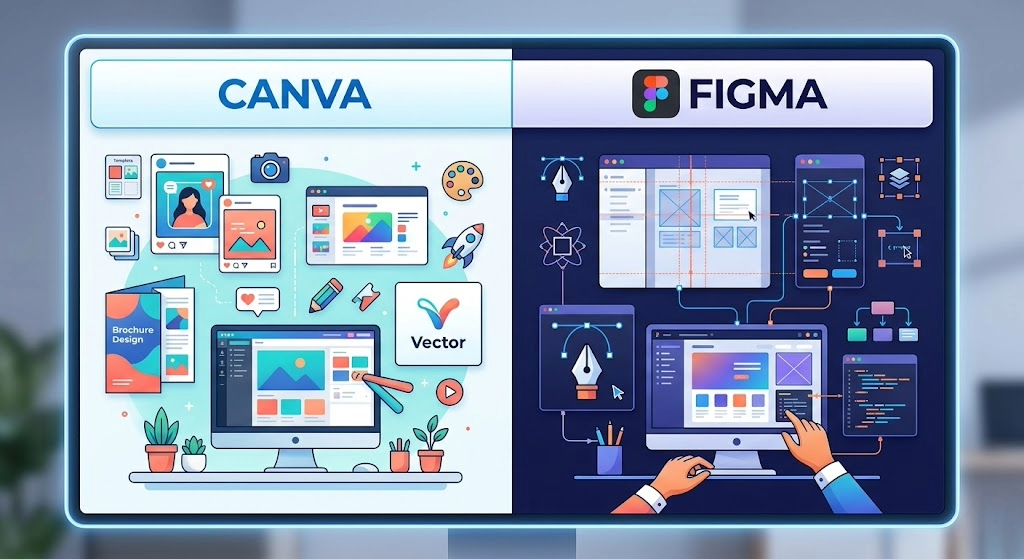
La elección entre Canva y Figma raramente se plantea en términos políticos o geopolíticos. Se plantea en términos de interfaz, precio, colaboración en tiempo real y funcionalidades técnicas. Y sin embargo, hay una dimensión de la comparativa que afecta directamente a empresas europeas, agencias creativas y equipos de diseño que trabajan con datos de clientes bajo el RGPD: el origen corporativo de cada herramienta y el país bajo cuya jurisdicción se procesan los datos de diseño, los archivos de clientes y la información de comportamiento de usuario dentro de la plataforma.
Figma fue fundada en San Francisco en 2012 por Dylan Field y Evan Wallace. Cotizó públicamente en la Bolsa de Nueva York y fue objeto de una propuesta de adquisición por parte de Adobe (también americana) por 20.000 millones de dólares en 2022, que fue bloqueada por la Comisión Europea y el CMA británico por consideraciones de competencia en diciembre de 2023. Figma opera como empresa independiente bajo la jurisdicción americana, con servidores en EE.UU. y en la nube de AWS, y está sujeta a la legislación americana incluyendo la Cloud Act. EE.UU. puntúa 7,85 en el índice EIU, por encima del umbral democrático, pero las implicaciones para datos europeos son similares a las de cualquier otra plataforma americana.
Canva fue fundada en Perth, Australia en 2013 por Melanie Perkins, Cliff Obrecht y Cameron Adams. Australia puntúa 8,97 sobre 10 en el índice EIU, uno de los valores más altos del índice global, lo que lo convierte en una de las opciones corporativas más alineadas con el criterio democrático para una herramienta de diseño. Canva tiene valoración de empresa privada en torno a 26.000 millones de dólares y ha rechazado varias ofertas de adquisición. Sus servidores están distribuidos globalmente incluyendo en la Unión Europea, y aunque la entidad legal controladora es australiana y no europea, Australia ha tenido históricamente una relación de adecuación de datos más clara con el marco europeo de privacidad que EE.UU.
Funcionalidades: herramientas para necesidades distintas
La comparativa funcional entre Canva y Figma tiene una respuesta que la industria ha consolidado con bastante claridad: son herramientas para necesidades distintas y solo compiten directamente en un subconjunto de casos de uso. Figma es la referencia del diseño de interfaz de usuario (UI) y de la prototipación interactiva para productos digitales. Su sistema de componentes, sus variantes, sus instancias de diseño, su integración con handoff de desarrollo (Dev Mode), y su capacidad para manejar sistemas de diseño complejos a escala de empresa hacen de Figma la herramienta estándar de la industria para equipos de producto digital. Si diseñas aplicaciones móviles, productos SaaS o interfaces web complejas, Figma es la referencia ineludible.
Canva es una herramienta de comunicación visual democrática en el sentido técnico de la palabra: está diseñada para que personas sin formación técnica en diseño puedan producir materiales de comunicación de calidad aceptable. Sus plantillas cubren presentaciones, posts de redes sociales, documentos de marca, infografías, materiales de impresión y docenas de formatos más. La curva de aprendizaje es mínima, la colaboración es fluida, y las funciones de gestión de brand kit permiten a equipos pequeños mantener coherencia visual sin un diseñador dedicado. Para agencias de marketing, equipos de comunicación de pymes, educadores y creadores de contenido, Canva resuelve el 90% de las necesidades visuales cotidianas con una fracción del esfuerzo que requeriría cualquier herramienta de diseño profesional.
El modelo freemium y sus implicaciones
Ambas herramientas operan en modelos freemium con planes de pago para equipos. Figma Professional cuesta 12 dólares por editor al mes, y el plan Organization (con controles de empresa más avanzados y SSO) escala significativamente. Canva Pro cuesta alrededor de 12 euros al mes para uso individual. Canva para Equipos añade controles de marca, aprobaciones y colaboración más avanzada. Figma tiene un plan gratuito generoso para proyectos individuales y equipos pequeños, aunque limita el número de proyectos activos. La economía de escala beneficia más a Canva para equipos grandes de comunicación y marketing, y a Figma para equipos de producto con pocos diseñadores pero muchos roles de solo-lectura.
Desde el criterio democrático, la elección entre Canva y Figma es razonablemente buena en ambos casos: Australia (8,97 EIU) y EE.UU. (7,85 EIU) están ambos claramente por encima del umbral. La diferencia más relevante para empresas europeas no es la puntuación democrática del país de origen sino la gestión de datos bajo RGPD. Figma, bajo jurisdicción americana con Cloud Act, tiene las mismas incertidumbres jurídicas que cualquier plataforma de EE.UU. Canva, bajo jurisdicción australiana, tiene un perfil ligeramente más cómodo para datos europeos aunque tampoco es equivalente a una plataforma europea con RGPD nativo. La alternativa europea para diseño UI es Penpot, el proyecto open source español (España, 8,13 EIU) que la empresa Kaleidos lanzó como alternativa de código abierto auto-hospedable a Figma, con crecimiento rápido aunque todavía sin paridad de funcionalidades en el segmento profesional.
Para equipos de diseño europeos que trabajan con clientes en sectores regulados, la comparativa Canva vs Figma tiene una dimensión práctica adicional que la teoría de la jurisdicción de datos convierte en urgente: la responsabilidad contractual. Cuando un estudio de diseño europeo usa una herramienta SaaS americana para trabajar en un proyecto para un cliente del sector financiero, médico o educativo que opera bajo regulación sectorial europea, la responsabilidad de asegurar que los datos del cliente no viajan fuera de la UE sin las garantías adecuadas recae sobre el estudio de diseño, no sobre Figma o Canva. Penpot, al ser auto-hospedable en servidores europeos, elimina esa responsabilidad contractual por defecto: los datos nunca salen de la infraestructura controlada por el cliente. Ese argumento, que en la práctica se traduce en cláusulas contractuales de tratamiento de datos más simples y en reducción de riesgo de incumplimiento del RGPD, es más relevante para estudios de diseño profesionales europeos que las diferencias de interfaz o precio entre las dos plataformas americanas.
El argumento del coste total de propiedad también favorece a Penpot para organizaciones europeas. Una organización que implementa Penpot auto-hospedado en infraestructura cloud europea tiene costes de servidor predecibles sin el riesgo de escaladas de precio por usuario que han afectado a usuarios de Figma y Canva cuando han cambiado sus modelos de precios en el pasado. La soberanía de datos, la independencia de proveedor, y los costes predecibles son los tres argumentos económicos que se suman al argumento democrático para Penpot en organizaciones con departamento de IT capaz de gestionar la infraestructura. Para organizaciones sin esa capacidad, Figma o Canva siguen siendo opciones con mejor perfil democrático que cualquier equivalente chino, con la ventaja adicional de que el ecosistema de soporte, tutoriales y comunidad es incomparablemente más rico que el de cualquier alternativa emergente.