
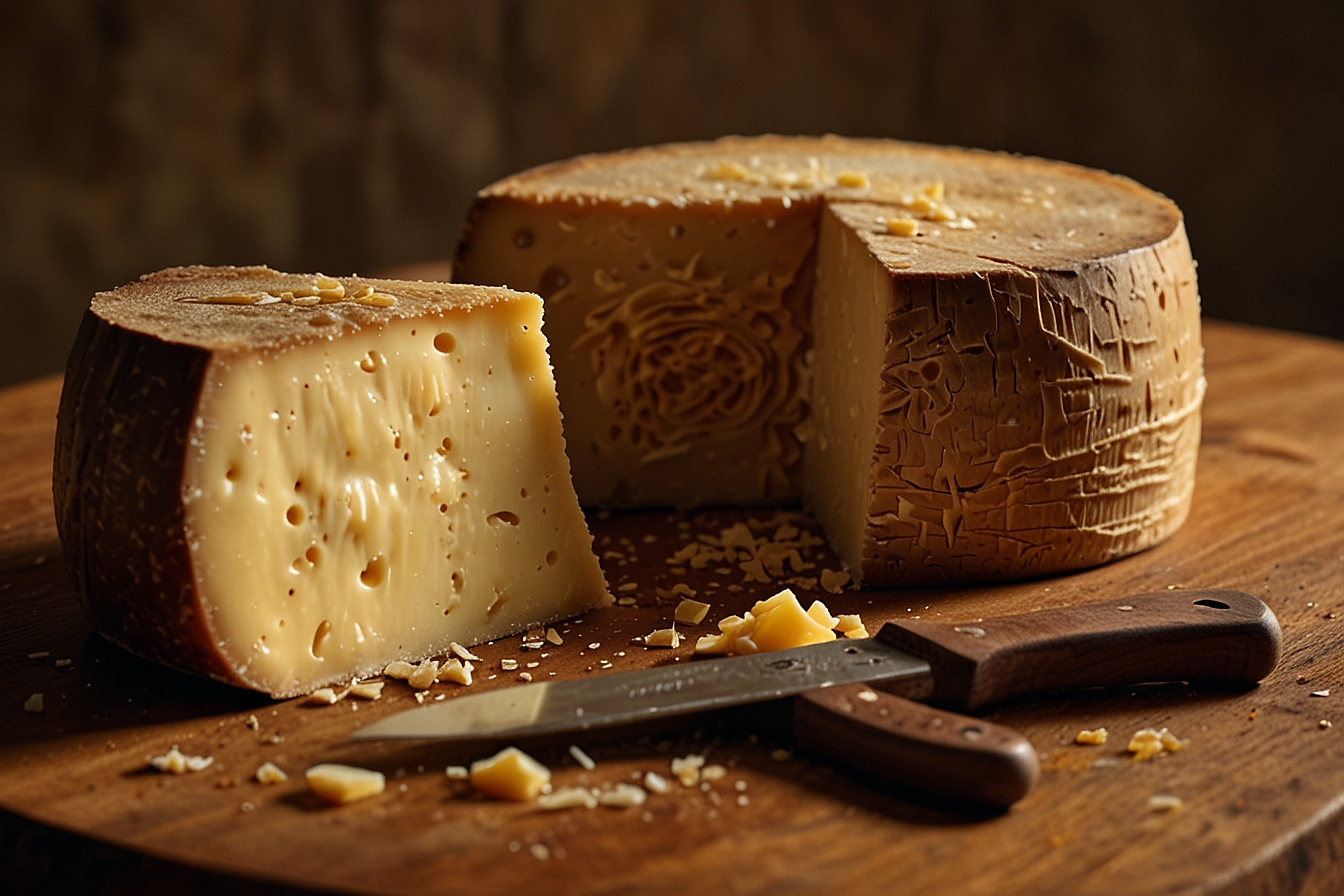
El queso Parmigiano Reggiano tiene algo que muy pocos productos alimentarios del mundo pueden reclamar: una cadena de suministro geográficamente fijada por ley. La denominación de origen protegida (DOP), regulada por la Unión Europea y gestionada por el Consorzio del Parmigiano Reggiano, establece que el queso solo puede producirse en las provincias de Parma, Reggio Emilia, Módena, y partes de Bologna y Mantua. Las vacas deben ser de raza Frisona Italiana criadas en esas mismas provincias. La leche no puede ser transportada más de determinada distancia antes de la elaboración. La maduración mínima es de 12 meses, con diferentes categorías para 18, 24, 30 y más de 36 meses. Es una DOP que ha resistido décadas de presiones comerciales y que ha creado, casi sin proponérselo, un modelo de producción alimentaria articulado sobre el territorio democrático más sólido de Europa del sur.
Italia puntúa 7,67 sobre 10 en el Índice EIU 2024. No es la democracia más consolidada de la Unión Europea, pero es una democracia plena con décadas de alternancia política, sistema judicial independiente, libertad de prensa garantizada en la práctica para la mayoría de los medios, y participación sindical de los trabajadores de la industria alimentaria. Los trabajadores queseros del consorcio no son agricultores en economías de subsistencia expuestos a intermediarios que se quedan con la mayor parte del valor: son empleados de cooperativas o pequeñas empresas con contratos colectivos, seguridad social y acceso a los mecanismos de resolución de conflictos laborales del estado italiano.
El falso parmesano: el fraude con mapa
El problema democrático del parmesano no está en el original. Está en la imitación. La producción de quesos que se comercializan como parmesano, parmesan o con denominaciones confusamente similares en países fuera de la UE es un mercado enorme. EE.UU. produce más queso etiquetado como parmesano que Italia. Argentina, Brasil y Australia también tienen producciones significativas. Dentro de la UE, la protección de la DOP es total: no puedes vender queso francés, español o alemán como parmesano. Fuera de la UE, la situación es mucho más compleja y depende de qué acuerdos de reconocimiento de indicaciones geográficas haya negociado la UE con cada país.
El Parmigiano Reggiano exportado a EE.UU., Japón, Australia o Brasil es auténtico y trazable. Lo que el consorcio lleva décadas combatiendo es la producción americana de generic parmesan, que el mercado de EE.UU. considera un genérico sin relación con el original italiano. La batalla legal e institucional ha sido larga: la UE ha intentado negociar protecciones en el acuerdo TTIP con EE.UU., que nunca se completó, y en los tratados de comercio que ha cerrado con Japón (EPA, en vigor desde 2019) y Canadá (CETA, desde 2017), donde sí obtuvo protecciones significativas para el nombre Parmigiano Reggiano.
La cadena de valor y la prima de la maduración
Una de las cosas que hace al Parmigiano Reggiano especialmente interesante desde el punto de vista de la economía agrícola es cómo la maduración crea valor y lo distribuye dentro del sistema productor. Un queso de 12 meses tiene un precio de mercado significativamente inferior a uno de 24 o 36 meses. La diferencia no es solo de sabor (la maduración desarrolla la tirosina, los cristales blancos que aparecen en el queso curado, y concentra el sabor umami de forma exponencial). Es también una diferencia en el capital inmovilizado: mantener una rueda de 40 kilos durante 24 meses requiere financiación, espacio de maduración climatizado, y la certeza de que el mercado final pagará la prima correspondiente.
El consorcio gestiona este problema de forma colectiva: establece precios mínimos por categoría de maduración que protegen a los productores pequeños frente a las oscilaciones del mercado de materias primas lácteas. El sistema no es perfecto y ha habido crisis periódicas de precios, especialmente cuando la sobreproducción empuja los precios por debajo del coste de producción. Pero la estructura cooperativa dominante en el consorcio, con productores de tamaño mediano que son también accionistas de las instalaciones de maduración, crea un alineamiento de incentivos entre el productor, el afinador y el comercializador que es notablemente más democrático en su distribución de valor que el modelo de grandes marcas globales de productos alimentarios industriales.
Grana Padano: el primo más accesible
Cualquier análisis del Parmigiano Reggiano debe mencionar al Grana Padano, el queso DOP italiano más vendido del mundo y el competidor directo en el segmento de quesos de pasta dura larga maduración. El Grana Padano tiene una DOP más amplia geográficamente (cubre el Valle del Po desde el Piamonte hasta el Véneto) y una maduración mínima de 9 meses, lo que permite producirlo a mayor escala y a menor precio. Desde el criterio democrático, comparte exactamente las mismas ventajas del Parmigiano: producido en Italia (7,67 EIU), dentro de un sistema DOP europeo auditado, con trabajadores bajo legislación laboral italiana.
La elección entre Parmigiano Reggiano y Grana Padano desde el criterio democrático es, básicamente, una elección de presupuesto. Ambos pasan con nota. Donde hay una diferencia de criterio es en la decisión entre el original italiano y las imitaciones de origen no verificado que se venden en supermercados europeos bajo denominaciones como parmesan o formaggio a la parmigiana sin indicación de origen o con indicación vaga. El criterio de Democratic Market en este caso es inequívoco: busca el sello DOP europeo y el logo del Consorzio del Parmigiano Reggiano, que garantizan tanto el origen democrático como la calidad intrínseca del producto.
La pregunta de fondo que hay que hacerse cuando compramos queso curado de larga maduración es si queremos pagar por un producto con denominación de origen protegida que garantiza origen, proceso y condiciones laborales mínimas verificables, o si preferimos un producto más barato sin esas garantías. En el caso del Parmigiano Reggiano frente a los sucedáneos sin DOP, la diferencia de precio en el mercado europeo es real pero no es tan dramática como para que la elección informada requiera un esfuerzo económico inasumible para la mayoría de consumidores. Un queso que se usa para terminar pasta, en pequeñas cantidades ralladas, tiene un coste por uso que incluso en la versión DOP auténtica es razonable para el presupuesto doméstico medio europeo. El argumento del coste, en este caso concreto, no es un obstáculo real para la elección democrática.