Comprar una bicicleta eléctrica en 2026 es, sin necesariamente saberlo, tomar partido en una de las disputas industriales más intensas del momento: quién controla la cadena de suministro de la movilidad sostenible. El 70% de las bicicletas eléctricas vendidas en Europa tienen componentes críticos fabricados en China. No porque los ingenieros europeos no sepan hacerlos, sino porque China construyó durante dos décadas la infraestructura industrial, las economías de escala y las redes de proveedores especializados que hacen que fabricar una batería de litio en Guangdong sea entre un 40% y un 60% más barato que hacerla en Alemania o Países Bajos. Ese diferencial de precio es real, tiene causas estructurales, y tiene consecuencias geopolíticas que el mercado convencional de bicicletas eléctricas no te explica en el momento de la compra.
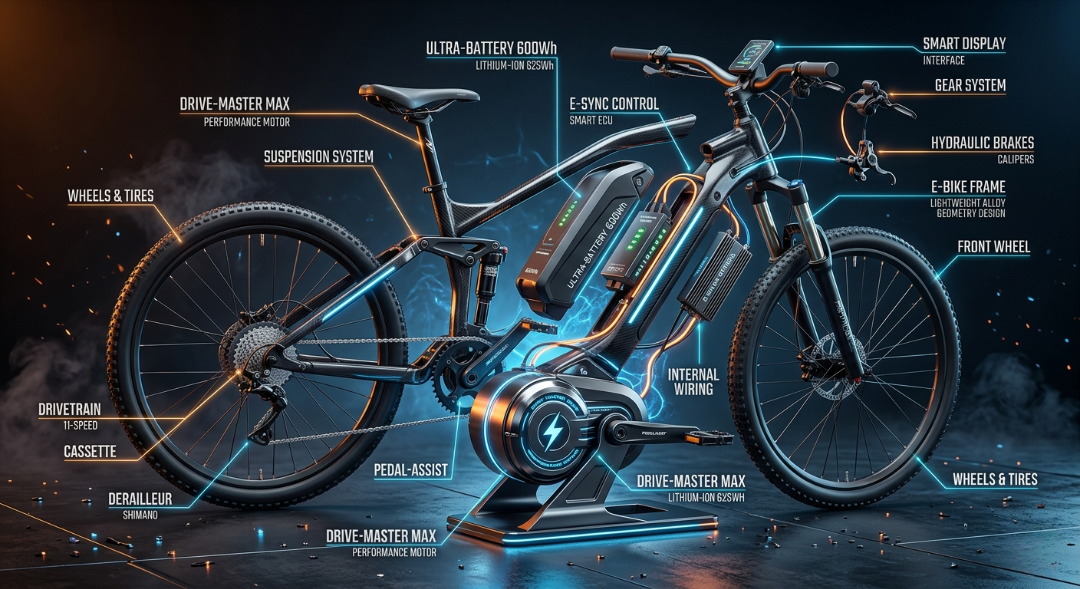
Desde la perspectiva de Democratic Market, esto plantea una pregunta concreta y con respuesta más matizada de lo que podría parecer a primera vista: ¿puede existir una bicicleta eléctrica con cadena de suministro genuinamente democrática? La respuesta es sí, pero depende de qué componente estás mirando y a qué precio estás dispuesto. La e-bike no es un producto monolítico sino un ensamblaje de cuatro subsistemas con orígenes geográficos potencialmente muy distintos: la batería, el motor, el marco y la transmisión.
La batería: el componente más problemático y más determinante del precio
La batería representa entre el 30% y el 40% del precio final de una bicicleta eléctrica y es el componente con mayor concentración geográfica en su fabricación a nivel mundial. Las celdas de litio que se usan en la gran mayoría de baterías para e-bikes provienen de un número muy limitado de fabricantes: CATL y BYD en China, Samsung SDI y LG Energy Solution en Corea del Sur, y Panasonic en Japón. Esta distribución es importante desde el criterio de Democratic Market: China puntúa 2,12 en el Índice de Democracia EIU 2024, mientras que Corea del Sur obtiene 8,09 y Japón 8,40. Las celdas de origen coreano o japonés no plantean ningún problema desde el criterio democrático. Las chinas sí.
La mayor parte de las marcas europeas de e-bikes de gama media y baja usan celdas de origen chino porque son las más baratas y las más disponibles logísticamente. En el segmento premium, sin embargo, la situación es diferente. Riese & Müller, fabricante alemán de alta gama con sede en Darmstadt, trabaja con baterías que especifican celdas Samsung SDI en sus modelos de mayor precio. Gazelle, la marca neerlandesa con más de 130 años de historia, también ha optado por cadenas con celdas de origen coreano en parte de su gama. Estas decisiones son más caras para el fabricante y para el consumidor final, pero trasladan el origen de ese componente crítico a una cadena democráticamente sólida.
El motor: el componente donde Europa mantiene ventaja real
Si la batería es el punto débil democrático de la mayoría de e-bikes, el motor es donde la industria europea ha conseguido mantener una posición competitiva genuina que ningún fabricante chino ha logrado replicar en calidad y fiabilidad. Bosch eBike Systems, con sede en Reutlingen, Baden-Württemberg, es el proveedor de motores de mayor confianza del mercado europeo. Sus motores Performance Line, Performance Line CX y Performance Line Speed se fabrican fundamentalmente en Europa y son el estándar de referencia en e-bikes de carretera y montaña de calidad. Shimano, empresa japonesa con instalaciones de producción en Europa, ofrece el motor EP8 que compite directamente con Bosch en el segmento de mountain bike y es la alternativa más elegida por marcas que no quieren la dependencia exclusiva de un solo proveedor.
Mahle y TQ-Systems, ambas empresas alemanas, tienen sus motores de alta eficiencia fabricados en Alemania. Mahle con su motor X20 y TQ con el HPR50 representan la cúspide tecnológica del segmento, con motores especialmente silenciosos y eficientes que se usan en bicicletas de carretera de alto rendimiento. El hecho de que el motor sea el segundo componente más caro de una e-bike de calidad y que haya tantos fabricantes europeos con alta puntuación democrática en ese segmento significa que incluso en una bici con batería de origen chino, el subsistema más complejo y valioso puede tener una cadena democráticamente sólida. Es un matiz importante.
El marco: Taiwán como alternativa democrática a China continental
Los marcos de aluminio para e-bikes se fabrican en un porcentaje muy alto en Asia, pero aquí la distinción entre China continental y Taiwán es fundamental desde el criterio democrático. Taiwán puntúa 8,99 en el Índice EIU 2024, siendo una de las democracias más robustas de Asia. Varios fabricantes europeos de referencia como Specialized, Trek o Giant tienen parte de su producción de marcos en Taiwán y utilizan ese origen como argumento de calidad y trazabilidad. La fabricación de marcos en China continental es más problemática desde el criterio democrático, aunque saber exactamente dónde se fabrica el marco de una bici concreta requiere preguntar directamente al fabricante, ya que esta información raramente aparece en las fichas de producto del mercado convencional.
Algunas marcas europeas han apostado deliberadamente por fabricación de marcos en Europa como argumento diferencial. Riese & Müller fabrica sus marcos en Darmstadt, Alemania, y esto forma parte de su propuesta de valor de forma explícita. Otras marcas europeas de gama alta como Pinarello o Wilier en el segmento de carretera también fabrican en Europa, aunque en el segmento específico de e-bikes de uso cotidiano, donde los volúmenes son mayores y los márgenes más ajustados, la fabricación europea de marcos es la excepción y no la regla.
La transmisión: el punto más democrático y más ignorado
La transmisión de una bicicleta eléctrica (cadena, cassette, desviadores, frenos) es el componente donde la cadena democrática es más sólida en la gama media y alta. Shimano, empresa japonesa que cotiza en bolsa y puntúa 8,40 en el Índice EIU por su país de origen, domina el mercado global de componentes de bicicleta. SRAM, empresa americana con sede en Chicago que puntúa 7,85, es la alternativa en el segmento de gama alta. Campagnolo, italiana, completa el trío para el segmento de carretera. Los tres fabricantes producen en países con puntuaciones EIU altas y tienen una presencia significativa de fabricación en sus países de origen o en instalaciones europeas.
El problema aparece en la gama baja del mercado, donde los componentes de transmisión son frecuentemente de fabricantes chinos sin nombre reconocible en el mercado internacional. Una bicicleta eléctrica de 700 u 800 euros con motor genérico chino, batería de celdas chinas, marco fabricado en China y transmisión de marca desconocida de origen chino tiene prácticamente la totalidad de su cadena de suministro en un país con puntuación EIU de 2,12. Es una bicicleta que puede funcionar perfectamente bien durante años. Pero no es, en ningún sentido, una cadena de suministro democrática.
Cómo elegir una e-bike con criterio democrático en 2026
El Reglamento europeo de Baterías y su impacto en la cadena democrática
En 2023 entró en vigor el Reglamento (UE) 2023/1542, conocido como el Reglamento europeo de Baterías, que establece por primera vez requisitos obligatorios de trazabilidad del carbono, contenido reciclado mínimo y pasaporte digital de producto para baterías industriales y de tracción vendidas en la UE a partir de determinadas fechas entre 2025 y 2030. Este reglamento tiene una consecuencia directa para el mercado de e-bikes: los fabricantes que venden en Europa tendrán que documentar y publicar la huella de carbono de sus baterías, el origen de los minerales críticos como el litio, el cobalto y el manganeso, y la fracción de material reciclado utilizado. Para baterías con celdas de origen chino, cumplir esos requisitos de transparencia puede ser más complejo, no porque la información no exista, sino porque las cadenas de suministro chinas no han tenido históricamente la presión regulatoria que genera esa documentación de forma sistemática.
El Reglamento de Baterías es, en la práctica, una convergencia parcial entre los criterios de sostenibilidad ambiental y los criterios de trazabilidad democrática que Democratic Market aplica desde hace más tiempo. No son lo mismo: una batería puede ser reciclable al 95% y estar fabricada bajo condiciones laborales inaceptables en un régimen autoritario. Pero la infraestructura de documentación que el reglamento exige empieza a hacer visibles cadenas de suministro que antes eran opacas para el comprador final, lo que a mediano plazo favorece a fabricantes que ya tienen esa transparencia integrada en su modelo.
El análisis de Democratic Market para bicicletas eléctricas pondera los cuatro subsistemas descritos: batería, motor, marco y transmisión. Una bicicleta entra en el catálogo si alcanza una puntuación media ponderada superior a 6,0 en el Índice EIU aplicado al origen de cada componente, con más peso en batería y motor por representar el mayor valor del producto. En la práctica de mercado actual, ese criterio se traduce en buscar bicicletas que combinen motor Bosch, Shimano o Mahle, con batería de celdas Samsung SDI o LG especificada explícitamente, marco de fabricación europea o taiwanesa, y componentes de transmisión Shimano o SRAM.
Las marcas que cumplen ese perfil de forma más consistente en el mercado europeo de 2026 son Riese & Müller, Gazelle en sus líneas de mayor precio, Cannondale, y determinadas configuraciones de Specialized y Trek con especificaciones de componentes de alta gama. Ninguna de estas marcas es barata. Una bicicleta eléctrica con cadena de suministro democrática coherente cuesta a partir de 2.500 o 3.000 euros en la configuración más básica que cumple los criterios. Por debajo de ese precio, casi inevitablemente algún componente crítico tiene origen chino. Eso no significa que no debas comprarla si no puedes permitirte ese presupuesto. Significa que si el origen democrático es un criterio para ti, debes al menos saber exactamente qué estás comprando. Y eso, precisamente, es lo que Democratic Market intenta hacer posible.