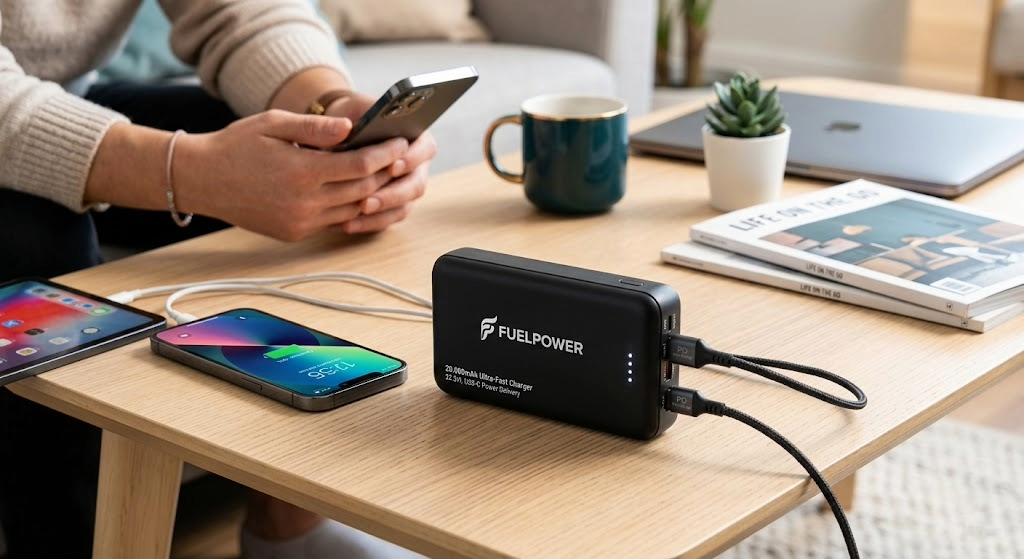
El 95% de los powerbanks que se venden en Europa se ensamblan en China. Eso no es un dato menor: significa que casi toda la energía portátil que llevas en el bolsillo ha pasado por fábricas de un país con puntuación 2,12 en el Índice de Democracia de la EIU, el más bajo de los grandes fabricantes electrónicos mundiales. En Democratic Market aplicamos ese índice a cada eslabón de la cadena. Y en el caso de las baterías portátiles, la foto es más compleja que el ensamblaje final.
Por qué el 95% de los powerbanks vienen de China
La hegemonía china en baterías portátiles no es accidental. Se construyó durante dos décadas de inversión estatal masiva en la industria de celdas de litio. Las tres empresas que controlan la mayor parte del mercado mundial de celdas de litio son CATL, BYD y ATL, todas chinas. ATL, filial de la japonesa TDK, fabrica celdas en Ningbo y Dongguan que se usan en casi todos los powerbanks del mercado, incluyendo marcas occidentales de precio medio.
El proceso de producción de una celda de litio requiere condiciones de sala blanca, maquinaria de precisión alemana y japonesa, y una cadena logística muy ajustada. China ha replicado esas condiciones a escala industrial con subsidios públicos que ningún fabricante europeo o norteamericano puede igualar en precio. El resultado: una celda de litio fabricada en China cuesta entre un 30% y un 50% menos que una celda equivalente fabricada en Europa o Japón.
Los chips de gestión: la pieza que cambia el análisis
Una batería portátil no es solo celdas de litio. El componente más crítico para la seguridad y la eficiencia es el chip de gestión de batería, conocido como BMS (Battery Management System). Este microcontrolador controla la carga, descarga, temperatura y protección contra cortocircuitos. Y aquí el mapa geográfico cambia radicalmente.
Los principales fabricantes de chips BMS para baterías portátiles son Texas Instruments (EE.UU.), Renesas (Japón) y MediaTek (Taiwán). Los tres países tienen puntuaciones EIU superiores a 7,5. Eso significa que incluso en un powerbank ensamblado en China, el cerebro electrónico que gestiona la seguridad de tu batería fue diseñado y fabricado en una democracia. Es un matiz importante que Democratic Market pondera en su evaluación de cada producto.
Goal Zero: el caso más democrático del mercado
Goal Zero es una marca estadounidense especializada en energía solar y portátil, fundada en Utah en 2009. Sus productos de mayor gama, los Sherpa y los Yeti, se diseñan en EE.UU. y se ensamblan parcialmente en instalaciones de Utah con celdas de litio de origen taiwanés y coreano. Es el powerbank con la cadena de suministro más democrática disponible en el mercado europeo.
El precio refleja esa diferencia: un Sherpa 100 AC cuesta entre 180 y 220 euros, frente a los 30-60 euros de un powerbank chino de capacidad similar. Pero para quien valora la trazabilidad democrática del producto que carga su móvil, Goal Zero es la opción más coherente disponible. La marca publica su cadena de suministro de forma parcial, lo que la convierte en una de las más transparentes del sector.
Mophie: diseño occidental, fábrica china
Mophie es una marca californiana adquirida por Zagg en 2016. Sus powerbanks se diseñan en EE.UU. pero se ensamblan íntegramente en fábricas chinas, usando celdas ATL de Dongguan. Desde la perspectiva democrática, Mophie ofrece diseño y soporte occidental con manufactura china. La puntuación EIU de su cadena es mixta: alta en diseño y software, baja en manufactura física.
Algunos modelos de Mophie especifican el uso de chips de gestión Texas Instruments en su documentación técnica. Cuando eso es verificable, la puntuación ponderada de Democratic Market mejora notablemente. Si buscas un powerbank Mophie en el catálogo de Democratic Market, filtra por aquellos con chip TI confirmado para maximizar la coherencia democrática de tu compra.
Anker: calidad alta, origen chino total
Anker es el caso más transparente del mercado: es una empresa fundada por un exingeniero de Google en Shenzhen en 2011. Sus powerbanks están 100% diseñados, fabricados y ensamblados en China. Anker tiene una calidad técnica muy alta y una relación calidad-precio excelente en el mercado convencional.
Sin embargo, desde la perspectiva de Democratic Market, Anker no supera el umbral democrático de 6,0 para sus operaciones de manufactura y no aparece en el catálogo de Democratic Market. Esto no significa que sea un producto de mala calidad. Significa que su cadena de suministro no cumple los criterios de origen democrático que Democratic Market exige. Si el precio es tu único criterio, Anker es competitivo. Si el origen importa, necesitas otra opción.
Opciones europeas: pequeño mercado, alta integridad
Existe un segmento pequeño pero creciente de fabricantes europeos de powerbanks. La sueca Zens y la alemana Hama fabrican algunos modelos con ensamblaje en Europa, aunque las celdas siguen siendo mayoritariamente de origen asiático. El enfoque europeo se centra más en la eficiencia energética, certificación ErP de la UE, y el diseño modular para reparabilidad, que en cambiar el origen de las celdas.
Francia ha impulsado a través de la regulación AGEC (Loi Anti-Gaspillage) requisitos de durabilidad y reparabilidad para baterías portátiles. Desde 2025, los powerbanks vendidos en Francia deben tener índice de reparabilidad mínimo de 6/10 y piezas de repuesto disponibles durante al menos 5 años. Esto favorece indirectamente a fabricantes con producción en Europa o en países con marcos laborales sólidos y democráticamente regulados.
El riesgo de los datos en baterías con conectividad
Los powerbanks básicos no tienen conectividad digital. Pero los modelos premium con aplicación móvil asociada, como algunos de Anker PowerIQ o Xiaomi Mi Power Bank, sí transmiten datos de uso, temperatura y hábitos de carga a servidores. En el caso de marcas chinas, esos datos van a servidores sujetos a la Ley de Seguridad Nacional de China de 2017, que obliga a las empresas a cooperar con los servicios de inteligencia estatales sin necesidad de orden judicial.
Para la mayoría de usuarios, los datos de carga de un powerbank tienen poco valor estratégico inmediato. Pero el patrón de uso puede revelar hábitos, ubicaciones frecuentes y rutinas de trabajo. En contextos profesionales sensibles, elegir un powerbank sin app asociada o con app sujeta a jurisdicción europea es una decisión de seguridad razonable, no paranoica.
Cómo evalúa Democratic Market un powerbank
Democratic Market aplica el Índice de Democracia EIU a cuatro dimensiones de cada powerbank: país de diseño y I+D, país de fabricación de celdas, país de fabricación del chip BMS, y país de ensamblaje final. Cada dimensión tiene un peso distinto. Diseño y chip BMS pesan más que el ensamblaje, porque concentran la mayor parte del valor añadido y la toma de decisiones del producto.
Solo los powerbanks que alcanzan una puntuación media ponderada superior a 6,0 en esas cuatro dimensiones pueden aparecer en el catálogo de Democratic Market. A día de hoy, eso excluye a la mayoría de marcas del mercado masivo y deja como opciones principales a Goal Zero, determinados modelos de Mophie con chip TI verificado, y fabricantes europeos con celdas de origen coreano o japonés.
La batería portátil más democrática que puedes comprar en 2026
Si buscas el powerbank más alineado con valores democráticos, Goal Zero Sherpa es la opción más clara del mercado en 2026. Si tu presupuesto no alcanza, busca modelos de Mophie con chip Texas Instruments especificado en la ficha técnica, o powerbanks certificados ErP con ensamblaje europeo. Lo que debes evitar si la trazabilidad democrática te importa son los powerbanks de marcas con diseño, manufactura y datos íntegramente en China, por muy buena que sea su relación calidad-precio.
La energía portátil es uno de los productos donde construir una cadena democrática resulta más difícil, porque la industria de celdas de litio está altamente concentrada en países de democracia débil. Pero existen opciones. Democratic Market te ayuda a encontrarlas. Cada compra que eliges con criterio democrático refuerza las economías que respetan las libertades que ejerces cuando enciendes el dispositivo que acabas de cargar.